
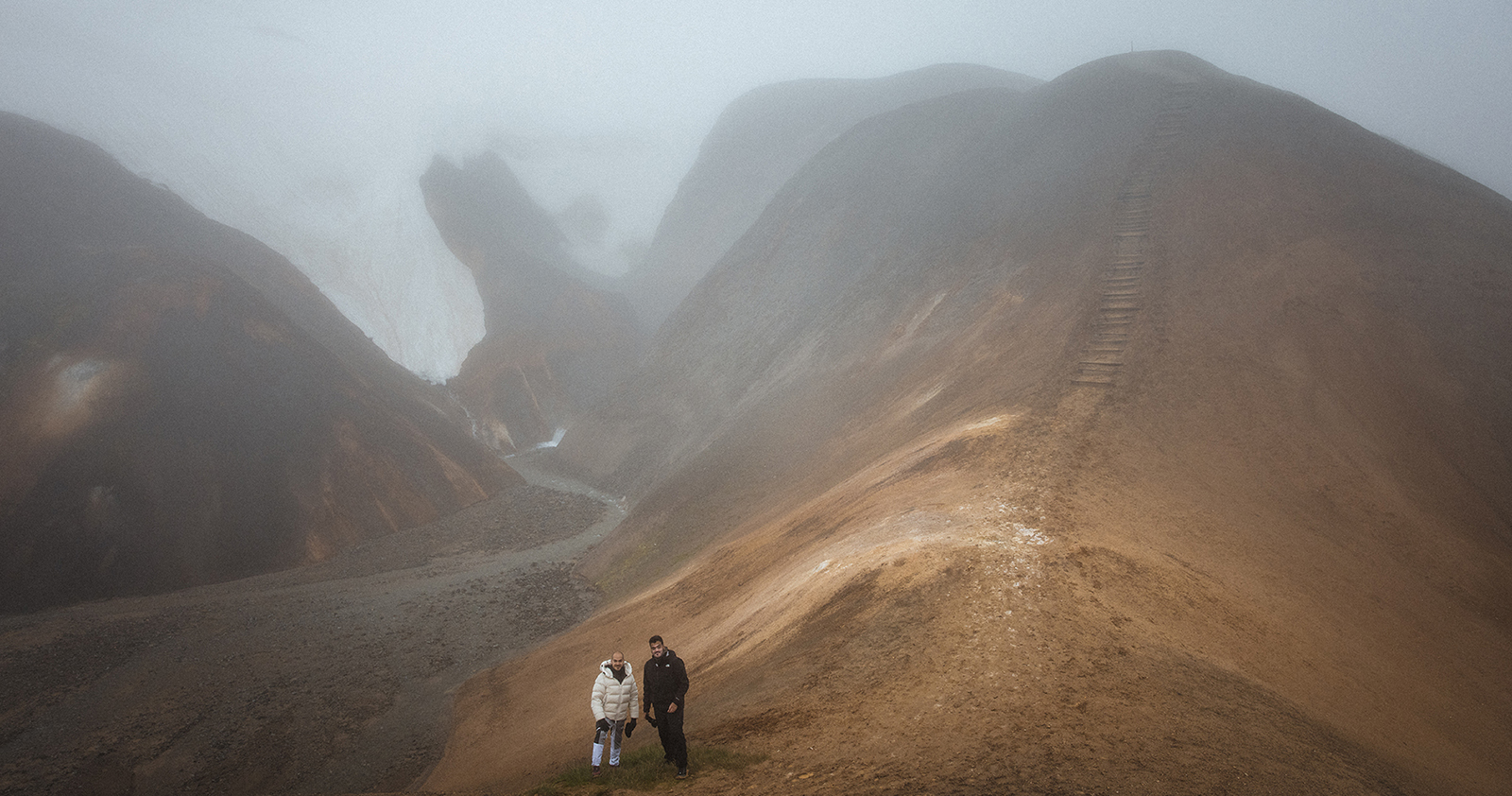
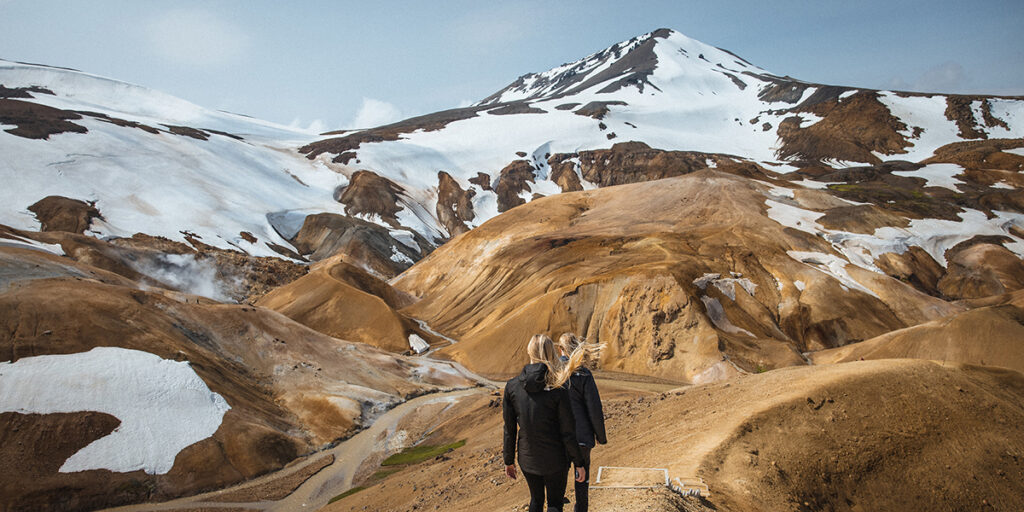
Deep in Iceland’s Central Highlands, where glaciers meet volcanic mountains and steam rises from the earth, Kerlingarfjöll feels almost too strange to be real. Its rust-red and golden rhyolite peaks, steaming geothermal valleys and patches of summer snow create one of Iceland’s most extraordinary landscapes- and one that still feels wonderfully remote.
If you are looking for a side of Iceland far beyond the classic Golden Circle and South Coast, Kerlingarfjöll is one of the places we would put very high on your list. And summer is the time to go: the Highland roads are accessible, the hiking trails open up, and the combination of colourful mountains, geothermal activity and lingering snow is at its most spectacular.
In this guide, we’ll show you what makes Kerlingarfjöll so special, what to see in Hveradalir, how to get there, what hiking is like, whether it is better than Landmannalaugar, and why exploring it with a local private guide can make such a difference.
What is Kerlingarfjöll?
Kerlingarfjöll is a spectacular mountain range in the heart of Iceland’s Central Highlands, located between the glaciers Hofsjökull and Langjökull and close to the historic Kjölur route.
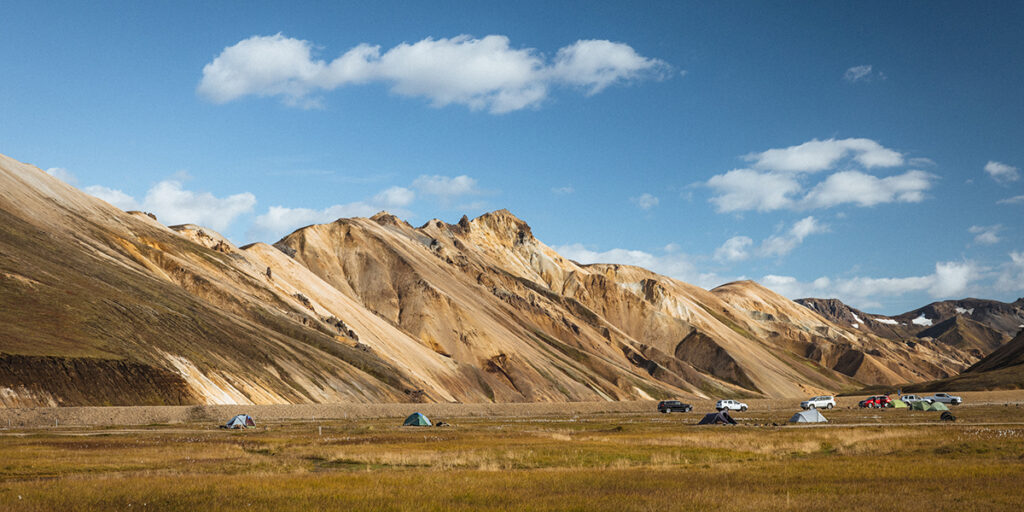
The highest peak, Snækollur, reaches 1,488 metres, while the surrounding mountains form part of an ancient volcanic system. Unlike the dark basalt landscapes that dominate much of Iceland, Kerlingarfjöll is famous for its pale, colourful rhyolite mountains, shaped by volcanic activity beneath thick glacial ice. The area contains one of Iceland’s largest rhyolite regions and an exceptionally diverse geothermal system.
That combination is what makes Kerlingarfjöll so extraordinary. In a single panorama, you can see mountains glowing in shades of orange, red and yellow, steam drifting from geothermal vents, rivers cutting through the valleys and snow lingering on the slopes even in summer.
It is Iceland at its most dramatic: fire and ice existing side by side.
Why is Kerlingarfjöll so colourful?
This is one of the first things visitors notice- and one of the best reasons to visit if you are interested in Iceland’s geology. Here, you can quite literally see it at work.
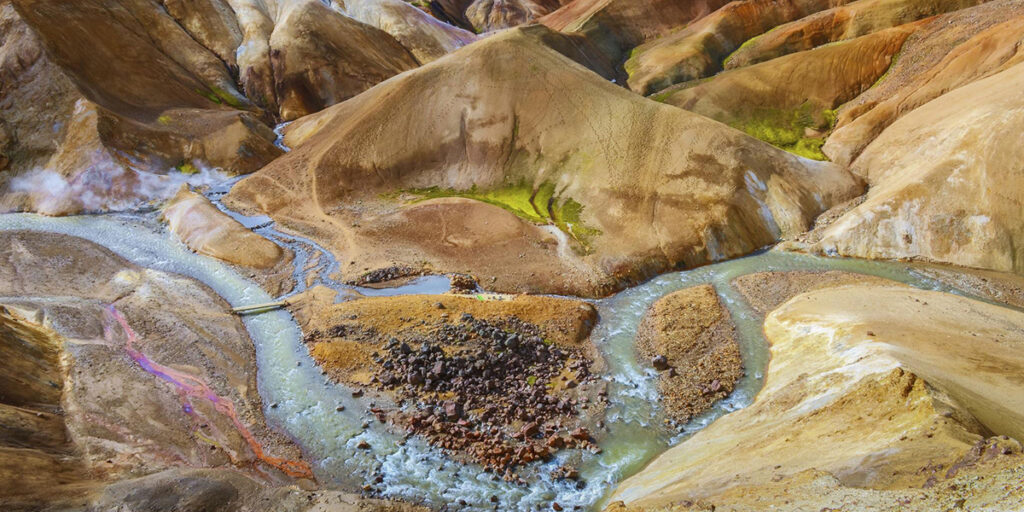
The mountains of Kerlingarfjöll are largely made of rhyolite, a silica-rich volcanic rock that formed during eruptions beneath glacial ice. The area is particularly unusual because some of these eruptions created rare rhyolite formations, including mountains shaped by interaction with ice.
But the colours you see aren’t simply the colour of the rock itself.
Over thousands of years, intense geothermal activity has altered the volcanic rocks and deposited minerals across the mountainsides. The result is a remarkable palette of rust, burnt orange, yellow, red, green and pale grey, sometimes changing dramatically within just a few metres.
Add snowfields, glacial rivers and clouds moving through the mountains, and the landscape seems to change constantly with the light.
It is also one of the reasons Kerlingarfjöll connects so beautifully with our guide to Iceland’s natural hot springs and geothermal pools, where we explored geothermal activity from a wider perspective.
Hveradalir: the geothermal heart of Kerlingarfjöll
If Kerlingarfjöll is the headline, Hveradalir is the scene-stealer.
The name Hveradalir translates roughly as “Valley of Hot Springs”, and it is one of Iceland’s most spectacular geothermal areas. Steam rises from the ground, fumaroles hiss among the hills and geothermal waters have helped carve and colour the surrounding landscape.
The geothermal system here is unusually extensive. Iceland’s Environment Agency identifies three major hot-spring areas within Kerlingarfjöll- Neðri-Hveradalir, Efri-Hveradalir and Hverabotnar- covering more than seven square kilometres at the surface. The density and diversity of geothermal features are among the reasons the area has such high scientific and conservation value.
And this is where Kerlingarfjöll becomes almost surreal.
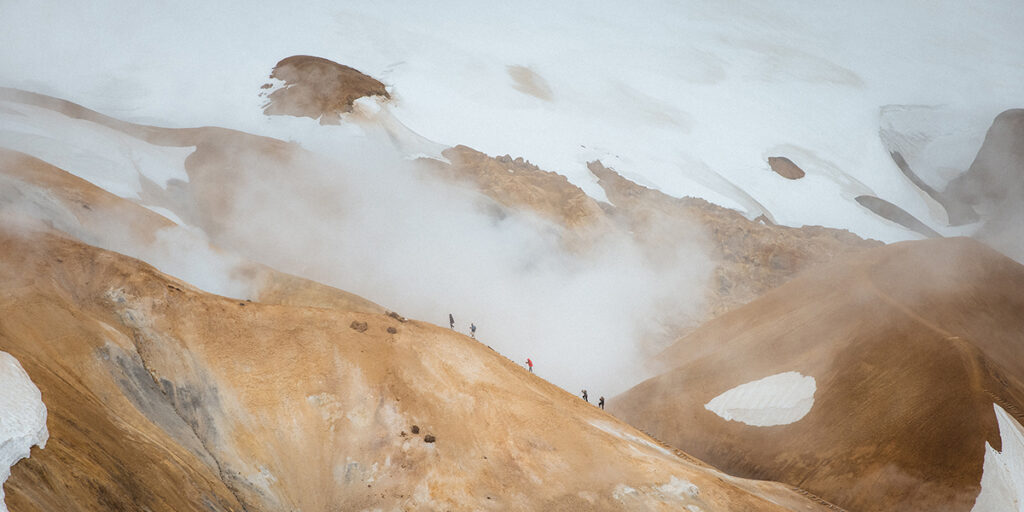
You might be walking through a quiet valley when suddenly a plume of steam appears between two orange ridges. A stream cuts through the mineral-stained earth. Snow sits on the mountain above while the ground beneath your feet is being warmed by geothermal heat.
It is difficult to find many places where glacial landscapes and active geothermal terrain are packed together so dramatically.
One important thing to know
Although you will see hot springs, steaming pools and geothermal water in Hveradalir, this is not a place to go for a swim. The geothermal features are dangerous, and visitors should stay on designated trails and keep a safe distance from hot ground and boiling water.
If you are hoping for a geothermal soak, there is another stop on our Kerlingarfjöll journey where you can do exactly that- Hveravellir, further along the Kjölur route.
Don’t forget to bring your swimsuit!
Kerlingarfjöll in summer: why now is the time to go
Kerlingarfjöll is fundamentally a summer Highlands destination for most independent travellers.
The official Highland Base information currently describes summer as running from approximately June 15 to September 30, when the mountain roads are accessible and the Highlands become much easier to explore.
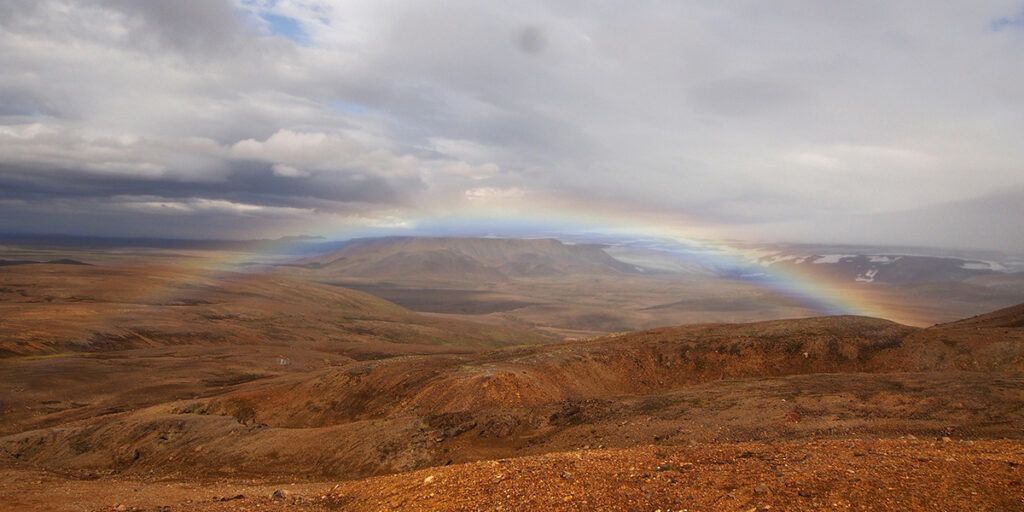
Summer does not mean predictable weather, though. This is still Iceland, and Kerlingarfjöll sits high in the interior, where conditions can change quickly. You can have sunshine, wind, rain, fog and even snow on the same day. That’s part of the experience- but it also means you need to plan properly.
If you’re travelling to Iceland in June, July, August or September, Kerlingarfjöll can be an extraordinary addition to your itinerary, particularly if you’ve already seen some of Iceland’s famous coastal attractions and want to experience something wilder.
And if you’re reading this in August, there is an especially good reason not to leave it until “next time” – the Highlands season is (too) short!
How to get to Kerlingarfjöll from Reykjavík
Kerlingarfjöll lies approximately 200 kilometres from Reykjavík, and the journey normally takes around 3.5 hours in summer conditions. The route follows the Kjölur highland road before continuing towards Kerlingarfjöll on the access road.
And this is one of those journeys where the destination is only half the story.
As you leave the more familiar landscapes around Reykjavík and the Golden Circle behind, Iceland gradually becomes emptier. Roads turn to gravel, vegetation becomes sparser and the huge open landscape of the interior takes over.
The journey through the Highlands is part of what makes Kerlingarfjöll feel so remote.
Can you drive to Kerlingarfjöll yourself?
Yes, summer access is possible by car, but this is not a route to approach casually.
Highland driving is very different from driving Iceland’s Ring Road. Conditions can change rapidly, roads can be rough and narrow, and vehicle requirements vary between Highland routes. SafeTravel specifically warns that not every 4WD vehicle is suitable for every F-road and recommends checking conditions before setting out.
Current road information for the F347 Kerlingarfjallavegur and the Ásgarður–Hveradalir section is available through Iceland’s official traffic information service.
So if you’re planning a self-drive trip, don’t simply trust Google Maps and assume that because you rented “an SUV”, you’re automatically ready for the Highlands.
Check the road conditions, weather, vehicle restrictions and your rental company’s Highland policy before setting out.
Why visit Kerlingarfjöll with a private guide?
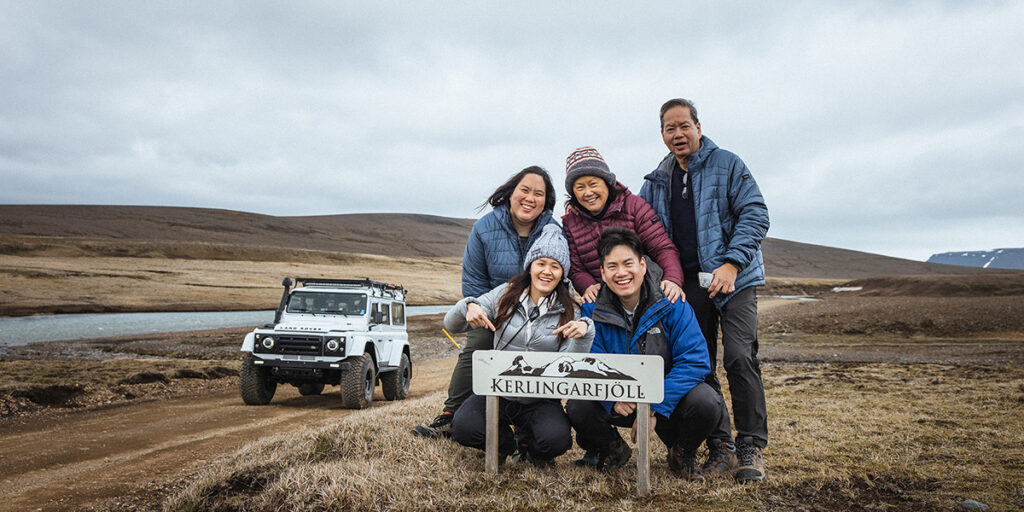
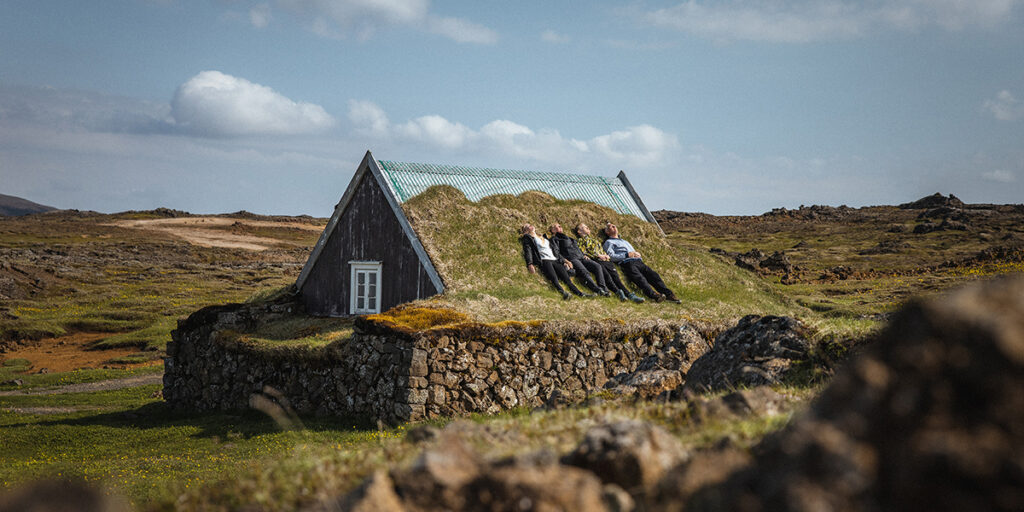
Kerlingarfjöll is a remote Highland destination, so visiting it comfortably in a single day requires good planning, local knowledge and some flexibility. Our private tour takes you from your accomodation in Reykjavík straight into the Highlands with an experienced guide and driver, with time to experience Hveradalir Geothermal Valley, Kerlingarfjöll Highlands, Hveravellir Geothermal Area and Gullfoss rather than trying to squeeze the region into a rushed stop.
There is another advantage for anyone who wants to come home with more than a camera roll full of phone photos: a professional photographer accompanies you throughout the day. Your tour includes 15 professionally edited photographs, allowing you to concentrate on the landscape and the experience while someone else captures it for you.
The tour runs from June through September, lasts approximately 11 hours and is limited to a maximum of four guests, making it a particularly personal way to experience this remote part of Iceland.
Kerlingarfjöll vs Landmannalaugar: which should you visit?
This is one of the most common dilemmas for travellers heading into Iceland’s Highlands.
And unfortunately, there isn’t a universal winner.
Both Kerlingarfjöll and Landmannalaugar are famous for colourful rhyolite mountains, geothermal activity and spectacular hiking. But the atmosphere and landscapes are different enough that your choice should depend on what kind of experience you want.
| Kerlingarfjöll | Landmannalaugar | |
| Landscape | Dramatic, steep geothermal mountains | Colourful mountains, lava fields and valleys |
| Signature colours | Rust, orange, yellow, red | Broader rainbow of colours |
| Geothermal features | Extensive steaming valleys and fumaroles | Geothermal areas and hot pools |
| Atmosphere | Remote, wild and quieter | More established and popular |
| Hiking | Excellent range of trails | Equally excellent range of trails |
| Best for | Geology, photography, dramatic scenery and solitude | Hiking variety, Laugavegur access and classic Highland scenery |
| Access | Kjölur + F347 | Several summer Highland routes |
| Overall feel | Otherworldly and rugged | Colourful and adventurous |
If your priority is a classic Icelandic Highland hiking experience with access to the famous Laugavegur trail, Landmannalaugar is an obvious choice.
But if what you want is steaming geothermal valleys, dramatic rhyolite mountains, fewer people and a landscape that feels almost extraterrestrial, we’d make a strong case for Kerlingarfjöll.
And if you have enough time?
Why choose? Visit both – with us! 🙂
→ Explore the Icelandic Highlands and visit Landmannalaugar
→ Discover Kerlingarfjöll with Icelandic Roamers
7 fascinating facts about Kerlingarfjöll
1. Its name comes from a troll
Kerlingarfjöll can be translated as “Old Woman Mountains.” According to Icelandic folklore, a female troll was caught by sunlight and turned to stone. The story is part of a much broader Icelandic tradition of explaining unusual rock formations through stories of trolls and hidden beings.
2. Kerlingarfjöll is much older than it looks
The volcanic rocks of the area date from the last Ice Age, with the oldest rocks identified in Draugafell at approximately 336,000 years old and younger formations in Fannborg around 79,000 years old.
3. Much of the volcanic activity happened beneath ice
The rhyolite mountains were formed largely through subglacial eruptions, when volcanic material accumulated beneath thick glacial ice. Some of the resulting formations are rare worldwide.
4. It is one of Iceland’s major rhyolite areas
Kerlingarfjöll contains the second-largest rhyolite area in Iceland, after the Torfajökull region. That unusual geology is one of the main reasons the mountains have their distinctive pale and fiery colours.
5. It used to have a summer ski area
Yes, you read that correctly.
Kerlingarfjöll was once home to a summer ski school. The resort eventually closed around the year 2000 as reliable snow became increasingly difficult to maintain. Today, the area is much better known for hiking, geology and its geothermal landscape.
6. The geothermal system covers a surprisingly large area
The geothermal features of Kerlingarfjöll extend across more than seven square kilometres, with several major geothermal areas concentrated within the mountain range.
7. Hveradalir means “Valley of Hot Springs”
It’s one of those Icelandic place names that doesn’t exactly try to hide the plot.
Hver refers to a hot spring or geothermal feature, while dalir means valleys.
So when you’re standing in Hveradalir surrounded by steam and geothermal activity, the name is doing a pretty good job of describing what you’re looking at.
What should you wear for Kerlingarfjöll?
Don’t let a sunny Reykjavík morning fool you.
The Highlands have their own weather, and conditions can change quickly. For a summer trip to Kerlingarfjöll, we’d recommend:
- waterproof hiking boots
- waterproof and windproof outer layers
- warm mid-layers
- hat and gloves
- comfortable hiking trousers
- sunglasses and sunscreen
- water and snacks
- a swimsuit and towel if your itinerary includes the Hveravellir bathing stop
- a small backpack for the hike
You may start the day in relatively mild weather and end up walking through strong wind and rain a few hours later. That is normal Iceland. Just keep in mind: the most important thing is layers – and you’ll be allright.
→ Prepare for Iceland with our Complete Seasonal Packing Guide
Is Kerlingarfjöll worth visiting on a day trip from Reykjavík?
Absolutely- especially if you want to see a side of Iceland that feels very different from the classic tourist routes. Kerlingarfjöll combines several things that make Iceland so fascinating: volcanic geology, geothermal activity, glaciers, colourful mountains, dramatic weather and vast wilderness.
You drive into the Highlands, watch the landscape change around you, hike through a geothermal valley, see steam rising from the earth and stand beneath snow-covered peaks in the middle of summer… That is the kind of Iceland we love!
Kerlingarfjöll is around 200 kilometres away from Reykjavík and the journey each way takes roughly 3.5 hours in normal summer conditions, so a day trip is a full-day experience rather than a quick excursion. Experiencing one of Iceland’s most spectacular Highland destinations without changing hotels or adding several days to your itinerary is an opportunity you simply can’t miss, once in Reykjavik!
For travellers with limited time, that can make Kerlingarfjöll particularly attractive.
Just but be prepared for a long day.
When is the best time to visit Kerlingarfjöll?
For most travellers, summer is the best time to visit Kerlingarfjöll.
Highland access is seasonal, and June through September offers the most practical conditions for hiking and independent travel. Highland Base currently describes its summer season as June 15–September 30, while Icelandic Roamers‘ private Kerlingarfjöll tour operates from June through September.
July and August generally offer the longest days and the most established summer access, while September can bring a quieter atmosphere and the first hints of autumn.
Whatever month you choose, check conditions shortly before travelling. Highland roads and weather are not something to treat as fixed variables.
Can you swim in the hot springs at Kerlingarfjöll?
Not in Hveradalir.
Hveradalir is a geothermal area with dangerous hot ground, steaming vents and geothermal waters, and visitors should remain on designated paths.
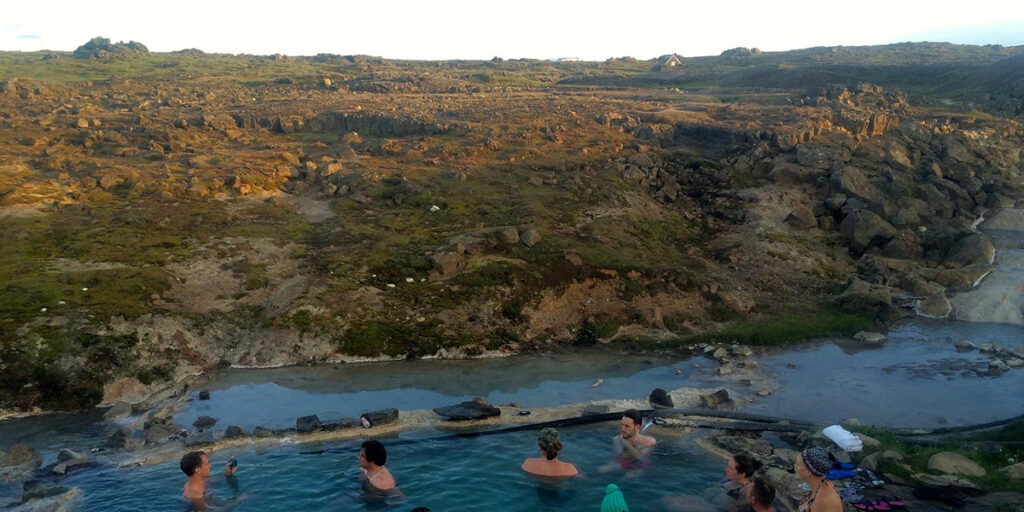
If you want to experience a natural geothermal bath as part of your Highland adventure, Hveravellir is a separate geothermal area along the Kjölur route where bathing is possible. Our Kerlingarfjöll tour can include a stop there, depending on the day’s conditions and itinerary.
Is Kerlingarfjöll difficult to hike?
It depends on the trail.
Kerlingarfjöll is a popular destination for hikers, with trails leading through its colourful mountains and geothermal valleys. The area offers hikes of different lengths and difficulty levels, but even the shorter routes can involve uneven terrain, elevation changes, wind and rapidly changing weather.
Hveradalir is one of the best-known areas to explore on foot, while longer routes allow experienced hikers to venture deeper into the mountain range. If you’re planning to hike independently, allow plenty of time and come prepared for rapidly changing Highland weather, uneven terrain and conditions that can be very different from those in Reykjavík.
Our Hveradalir section is approximately 2–3 km on marked trails and our tour is rated medium difficulty, making it a good option for travellers who want to explore the landscape without committing to a full-day mountain trek.
As always in Iceland, trail conditions matter more than a difficulty label on paper. If the weather turns, your guide may adjust the route- and that’s exactly what an experienced local guide should do.
Is Kerlingarfjöll a hidden gem?
“Hidden gem” is one of those travel phrases that gets thrown around far too often.
But in this case, there is some truth to it.
Kerlingarfjöll is certainly not unknown, and its popularity has grown considerably in recent years. Yet compared with Iceland’s most famous attractions, the Central Highlands remain much less visited, and the effort required to reach Kerlingarfjöll naturally limits casual stop-offs.
Even recent travellers discussing Kerlingarfjöll describe the area as remote and exceptionally scenic, with some preferring its otherworldly atmosphere to the more crowded Landmannalaugar.
So perhaps “hidden gem” isn’t quite right anymore….
“One of Iceland’s spectacular places that still feels like an adventure to reach” feels much closer.
Ready to see the other side of Iceland?
If you’ve already explored Reykjavík, the Golden Circle or the South Coast, Kerlingarfjöll is the perfect way to go deeper.
This isn’t Iceland’s easiest destination, and that’s exactly why it is so rewarding.
With Icelandic Roamers, you’ll travel privately from Reykjavík into the Central Highlands, explore the geothermal landscapes of Hveradalir with a local guide, have the opportunity to visit Hveravellir and Gullfoss, and have a professional photographer along for the journey.
You’ll come home with the memories, the stories- and 15 professionally edited photographs of an experience that deserves more than a few hurried phone snapshots.
→ Book your Kerlingarfjöll Private Tour:
Why Kerlingarfjöll belongs on your Iceland itinerary
Kerlingarfjöll is not the easiest place to add to an Iceland itinerary, and that is part of what makes the experience so rewarding. Reaching the mountains takes you away from the country’s main tourist routes and into a landscape where colourful rhyolite peaks, geothermal activity, snowfields and vast open valleys come together in a way that is difficult to find anywhere else in Iceland.
It is also a place where having someone who knows the area can make a real difference. Conditions in the Highlands can change quickly, access is seasonal, and the best experience is not necessarily about following a fixed list of viewpoints.
With a private guide, the day can be adapted to the weather, the road conditions and your interests, giving you more time to explore the landscapes that make Kerlingarfjöll so extraordinary.
So, if you want to see a wilder and more geological side of Iceland – Kerlingarfjöll is well worth going beyond the usual route for. Even for one day!
***
Hungry for more?
→ Explore Icelandic Roamers’ Multi-Day Summer Tours