

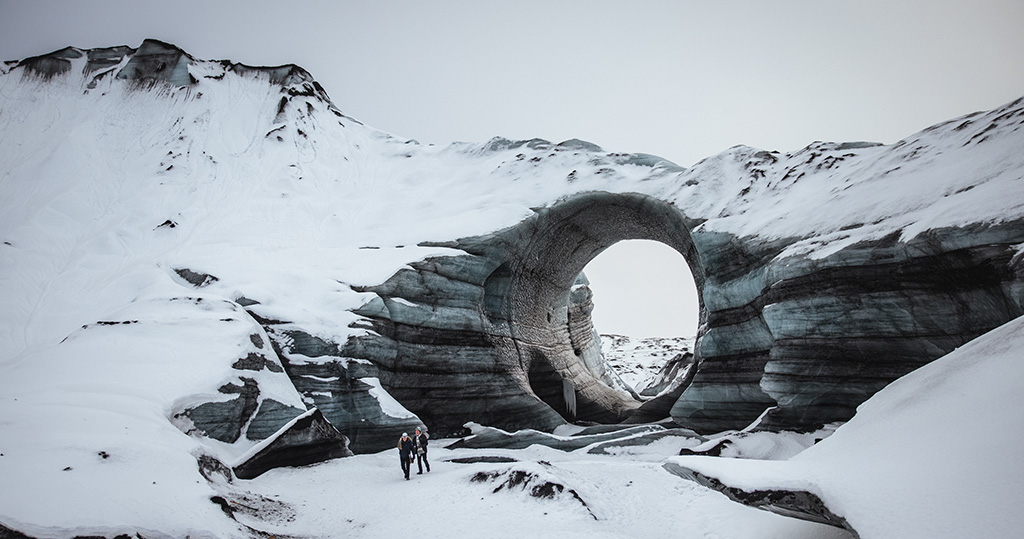
There are plenty of places in Iceland that look almost exactly as you imagined them. An ice cave is different. You can look at hundreds of pictures before your trip and still have very little idea what you are actually going to see, because the glacier is constantly changing. Every winter, meltwater, movement and freezing temperatures reshape the ice, creating new passages and formations while others disappear.
For us, an ice cave is not simply another attraction to squeeze into an Iceland itinerary. Some of our favourite winter journeys follow the entire South Coast towards Vatnajökull, with waterfalls, black beaches and enormous glacier landscapes gradually replacing the city behind us. By the time you finally step inside the glacier, it feels like a natural culmination of everything you have seen along the way.
So, if a blue ice cave is somewhere near the top of your Iceland wish list, here is what we think is worth knowing before planning your trip – including when to go, which glacier to choose and why we believe the journey to reach it matters almost as much as the cave itself.
Which ice cave should you visit in Iceland? For a classic natural blue ice cave experience in winter, we generally recommend the Vatnajökull region near Jökulsárlón. Katla can be a better choice for shorter South Coast itineraries that only reach Vík. Whichever you choose, natural ice caves change constantly, so the exact cave visited always depends on current conditions.
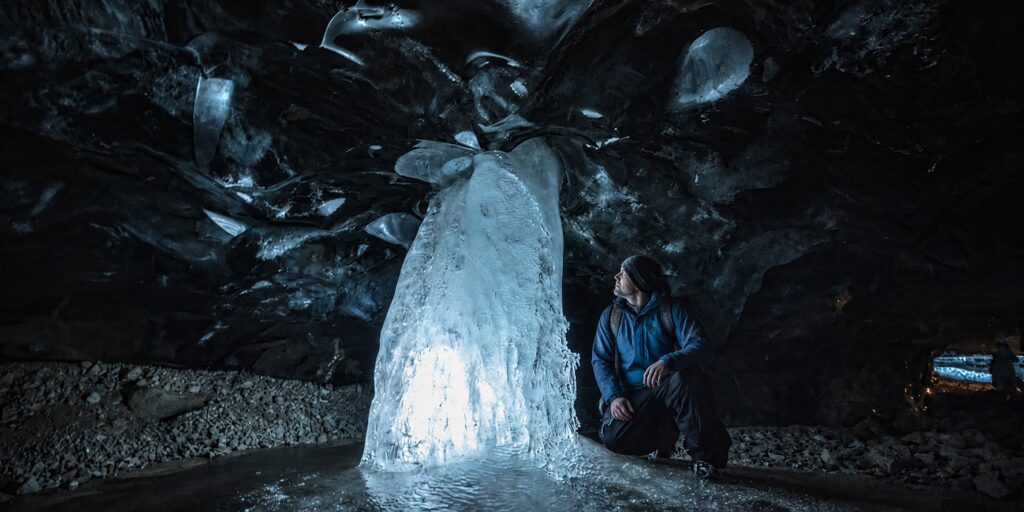
Iceland’s ice caves are never quite the same
Natural glacier caves are created as water finds its way through and beneath the ice, carving tunnels and openings while the glacier itself continues to move. During the warmer months, large amounts of meltwater can flow through these channels. As winter approaches and conditions change, some of the resulting formations become accessible enough for glacier guides to explore them and assess whether they can be visited safely.
This is why we are always a little cautious when we see an Iceland itinerary built around the promise of one specifically named ice cave. These are not permanent landmarks with fixed entrances and marked paths. A cave can change considerably during a single winter, and accessibility depends on everything from temperature and rainfall to meltwater and the movement of the glacier itself.
The 2026/27 season is a perfect example. Guides exploring Breiðamerkurjökull have identified several impressive formations, including a large natural cave named Verdandi, together with blue ice tunnels, canyons and other formations. It is fascinating to see what the glacier has created this year, but it does not mean that every visitor will – or should – enter Verdandi. Conditions decide which formation is the best and safest option on a particular day.
That unpredictability is part of what makes the experience special. You are not visiting something constructed for tourism. You are getting a glimpse inside a landscape that is still being created around you.
And yes, the ice really can be that blue
One of the first questions people ask us is whether Icelandic ice caves genuinely look as blue as they do in photographs. Sometimes, absolutely.
Glacier ice has been compressed over many years, pushing out much of the air originally trapped in the snow. Dense ice absorbs longer wavelengths of visible light more readily, while blue light travels deeper through it. In the right conditions, the result can be extraordinary – walls and ceilings glowing in shades ranging from pale turquoise to deep blue.
But this is Iceland, not a studio, and it is worth setting realistic expectations. Not every cave is completely blue. Some contain white or transparent ice, while others are streaked with dark volcanic material. Daylight and the thickness of the ice also affect how the colours appear, and cameras can sometimes pick up the blue more strongly than our eyes do.
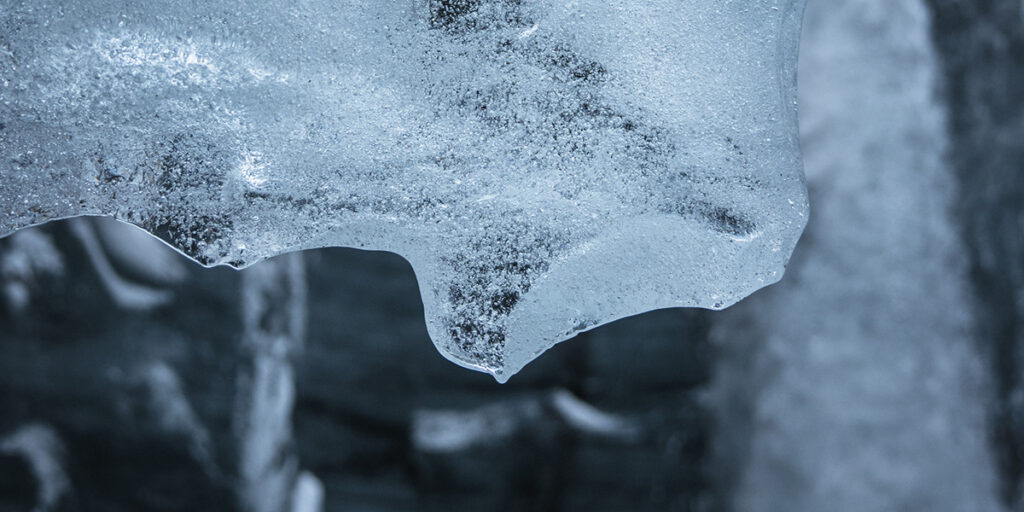
Look closer and the details become just as interesting as the colour: bubbles trapped inside the ice, ripples carved by water, layers created by years of compression and dark volcanic lines telling another chapter of Iceland’s history.
Where would we go for an ice cave in Iceland?
There are several glacier experiences around Iceland, but for our winter multi-day tours, Vatnajökull is the one we keep coming back to.
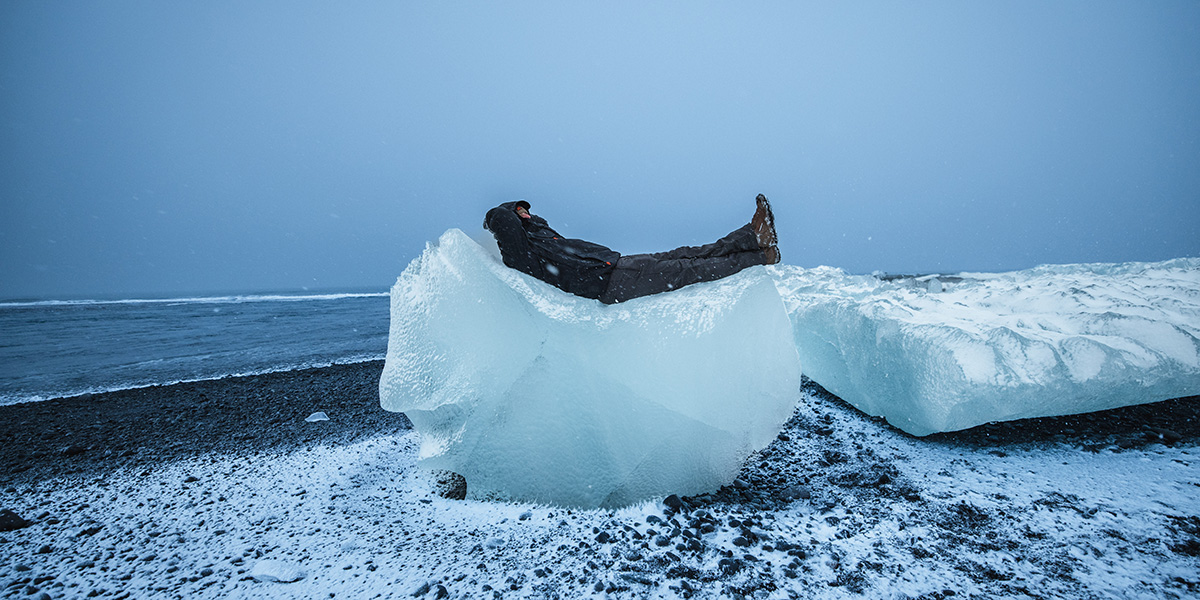
The reason is not simply the ice cave itself. It is everything around it. Vatnajökull dominates the landscape of south-east Iceland, with enormous outlet glaciers flowing between the mountains. Right beside it lies Jökulsárlón Glacier Lagoon, where icebergs break away from Breiðamerkurjökull and slowly drift towards the ocean. Across the road, pieces of that same ice wash back onto the black volcanic shore of Diamond Beach.
An ice cave experience here does not feel like a random activity added to a sightseeing day. It belongs to the landscape around it.
What about Katla Ice Cave?
Katla, beneath Mýrdalsjökull near Vík, offers a different experience. Its ice is famous for dramatic layers of black volcanic ash mixed with blue and white ice, and its location makes it considerably easier to reach from Reykjavík.
If your itinerary only reaches Vík, Katla can make perfect sense. But when we have two or more days to work with in winter, we prefer travelling further east and making Vatnajökull part of a much bigger South Coast journey.
You may also come across the famous Into the Glacier experience at Langjökull. Unlike the seasonal caves at Vatnajökull and Katla, these are man-made tunnels carved into the glacier. It can be an interesting experience, but it is quite different from stepping into a natural formation created by the glacier itself.
The best ice cave experience starts long before the ice cave
If you want to visit the natural ice caves around Vatnajökull, we would not recommend rushing from Reykjavík to the glacier and back simply to tick the cave off your list.
Jökulsárlón is roughly 380 kilometres from Reykjavík. In winter, short daylight hours and changing weather can make that journey considerably slower – but more importantly, there is far too much worth seeing along the way.
When we plan our 2-Day Winter Glacier Lagoon & Ice Cave Tour, the first day is not simply transportation to the glacier. We leave Reykjavík and let the South Coast unfold gradually.
We stop at Seljalandsfoss before continuing to the much more powerful Skógafoss. Further east comes Reynisfjara Black Sand Beach, where basalt columns rise behind one of Iceland’s most dramatic stretches of coastline. Beyond Vík, villages become fewer, open spaces grow larger and glaciers begin to dominate the horizon.
Eventually, we reach south-east Iceland and stay close to Vatnajökull rather than attempting the long journey back to Reykjavík. And if the sky clears that evening, being away from the city also puts us in a wonderful position to look for the Northern Lights.
The following morning, you wake up already in glacier country.
Jökulsárlón, Diamond Beach and then – inside the glacier
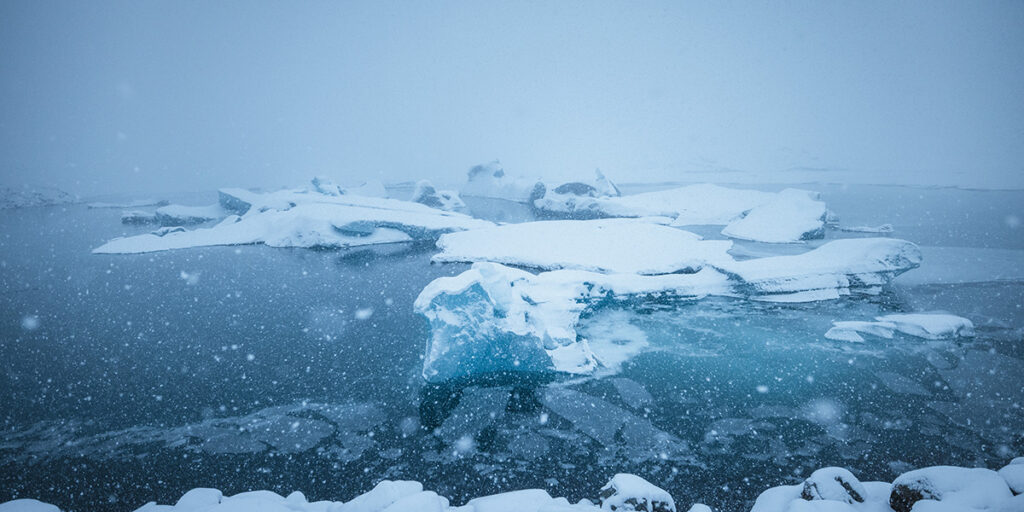
At Jökulsárlón, enormous pieces of glacial ice float through a lagoon created by the retreat of Breiðamerkurjökull. Some are intensely blue, others streaked with volcanic material, and no two visits ever look quite the same.
Eventually, the icebergs make their way towards the Atlantic. The ocean breaks them apart and sometimes pushes pieces back onto the nearby black shore, creating what we now call Diamond Beach.
For the specialist glacier part of our journeys, we work with experienced local glacier operators and qualified glacier guides who know the area and assess current conditions. The adventure usually begins by travelling into the glacial landscape in a modified 4×4 or super jeep before continuing on foot with the appropriate safety equipment.
Depending on conditions, you may enter a natural blue ice cave, walk through an ice tunnel or explore another spectacular formation created within the glacier. From there, the experience continues onto Falljökull, where crevasses, ridges and constantly changing ice formations give you another perspective on the glacier.
The exact cave is not something we want to promise months in advance. Instead, the specialist guides assess what is happening on the glacier and select the most suitable accessible formation according to current conditions and safety. For us, that is a much better way to experience a glacier than chasing the name of a cave you once saw on Instagram.
What is it actually like inside an ice cave?
Before heading onto the glacier, your specialist guides provide technical equipment such as a helmet and crampons or spikes. You will need proper ankle-high hiking boots and warm, waterproof clothing of your own.
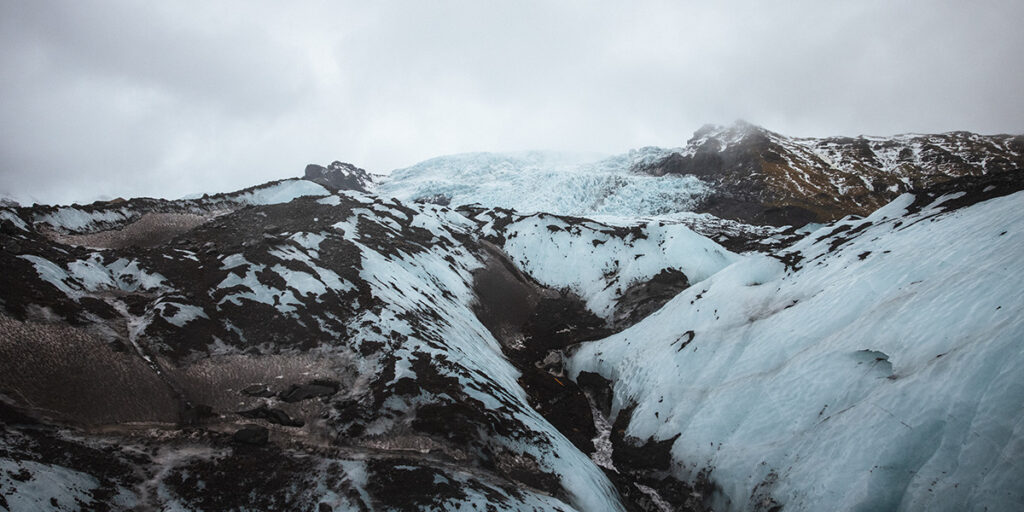
The approach is part of the adventure. Depending on the location of the best accessible formations, there may be a drive over rough terrain followed by a walk across glacial ground. Once inside, light entering through the ice reveals layers and textures that are difficult to see from the surface. Some sections can be smooth and translucent, while others twist into unusual shapes or carry dark lines of volcanic ash.
And yes, it is an incredible place for photographs and photography is an important part of our journeys at Icelandic Roamers – so we naturally pay attention to the light and those moments worth capturing along the way. Your private driver-guide is also a professional photographer, which means you can actually experience Iceland rather than spending the entire journey trying to document it yourself.
There is something rather nice about being in your own holiday photographs too 🙂
Is an ice cave tour difficult – and is it safe?
You do not need to be a mountaineer to join the experiences we include in our winter itineraries, but you should be comfortable walking over uneven natural terrain. The exact walking distance varies because access to natural ice formations changes throughout the season. If anyone in your group has limited mobility, an old injury or concerns about glacier walking, let us know when planning the journey so we can find the most suitable option.
This constantly changing environment is also why you should never try to find and enter a natural ice cave independently. Glaciers can hide crevasses and unstable ice, while meltwater and weather can alter access surprisingly quickly. Qualified glacier guides monitor these changes and adjust routes when necessary. If a particular formation is not safe on the day- we definitely do not want you going inside it simply because the tour description promised it.
Your safety comes first. Always!
Two days is good. Three days is even better.
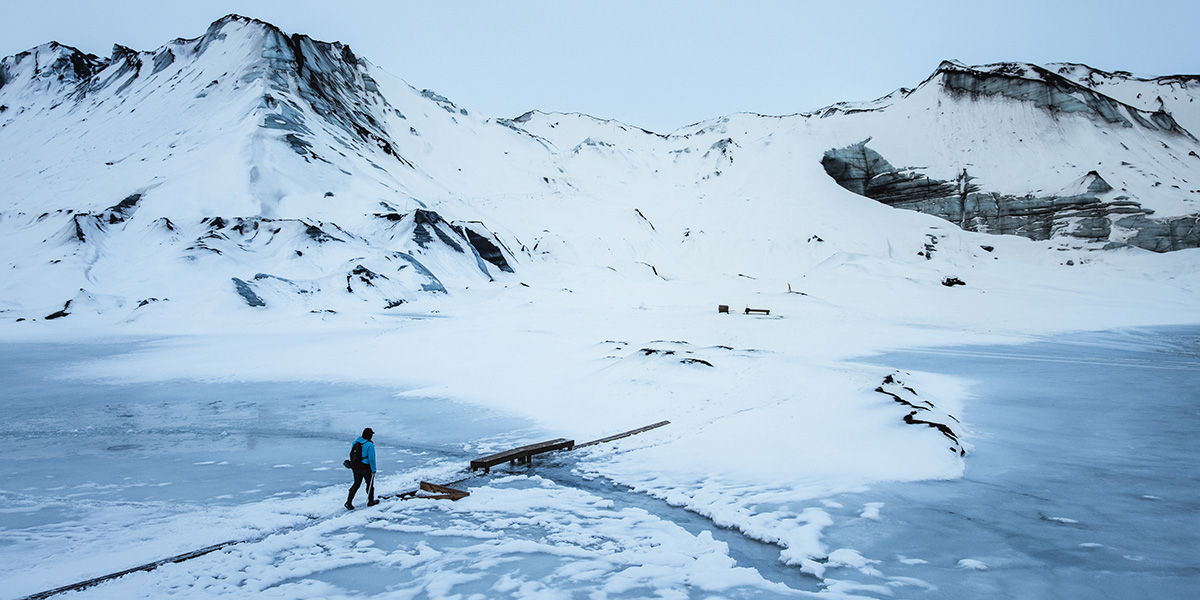
Our 2-Day Winter Glacier Lagoon & Ice Cave Tour is the shortest way we like to combine Vatnajökull with a journey from Reykjavík. It gives us enough time to enjoy the major South Coast highlights on the way east, stay overnight near the glacier and dedicate the following day to Jökulsárlón, Diamond Beach and the glacier experience.
If you have another day available, a three-day South Coast journey gives us considerably more breathing room. We can spend longer somewhere when the light is particularly beautiful, make additional stops and adapt more easily when Icelandic winter weather decides not to follow the plan.
That flexibility is one of the biggest advantages of travelling privately. Perhaps conditions are perfect at Reynisfjara and we stay longer. Perhaps a snow shower means another location makes more sense first. Or perhaps the sky clears after dinner and suddenly the Northern Lights become the best plan for the evening.
Those spontaneous moments are often the ones people remember most.
What if you are coming to Iceland in summer?
Natural blue ice caves around Vatnajökull are primarily a winter experience, but the glaciers remain a big part of our summer journeys through Iceland.
Instead of heading inside a winter cave, we can explore the glacier on a guided hike, discovering crevasses, ridges and blue ice formations under Iceland’s long summer daylight. If your priority is stepping inside a natural blue ice cave, come in winter. If you want to walk across a glacier beneath the long Icelandic summer light, we can build the journey around that instead.
So, are Iceland’s ice caves worth it?
If you ask us, we’d say ice caves are one of the most memorable things you can experience during an Icelandic winter – but perhaps not only for the reason you expect.
Yes, standing inside blue glacier ice is extraordinary. But when we think about our favourite ice cave journeys, we rarely remember only the cave. We remember the drive east with fresh snow on the mountains, the spray from Skógafoss, someone seeing Reynisfjara for the first time, Vatnajökull appearing on the horizon, icebergs moving silently through Jökulsárlón and stopping somewhere completely unplanned because the light looked too good to keep driving.
Then, somewhere in the middle of all of that, we stepped inside a glacier.
That is the experience we want to create.
At Icelandic Roamers, our winter journeys are private and tailor-made, with your own driver-guide and professional photography throughout the trip. For the specialist ice cave and glacier experience, we work with experienced local glacier operators who know the current conditions and choose the most suitable route on the day.
So if an ice cave is on your Iceland wish list, we would not simply ask which cave you want to visit. We would ask what kind of Iceland journey you want to build around it.
→ Explore Iceland’s winter landscapes with Icelandic Roamers and let us build your private journey around the glaciers.
Frequently asked questions about ice caves in Iceland
When is the best time to visit an ice cave in Iceland?
For natural blue ice caves around Vatnajökull, we generally recommend visiting between November and March. The exact season and accessibility depend on weather and glacier conditions.
Which ice cave in Iceland is the best?
For a classic natural blue ice cave experience in winter, Vatnajökull near Jökulsárlón is our preferred choice. Katla can be a better option for shorter itineraries that only reach Vík. Natural ice caves change constantly, so we recommend choosing the right glacier experience rather than planning around one specifically named cave.
Is Katla or Vatnajökull better?
It depends on your itinerary. Katla is closer to Vík and offers a distinctive combination of blue ice and black volcanic ash. If you have time to travel to Jökulsárlón, we prefer Vatnajökull because the ice cave becomes part of a much richer journey through south-east Iceland.
Can you visit a Vatnajökull ice cave from Reykjavík in one day?
Technically it is possible, but we do not recommend it, particularly in winter. We suggest at least two days so you can experience the South Coast, Jökulsárlón and the glacier without turning the journey into a race against the clock.
Can I visit an Icelandic ice cave without a guide?
No. You should never enter a natural glacier ice cave without a qualified glacier guide. Glaciers constantly change and can contain hidden crevasses, unstable ice and other hazards that require specialist knowledge to assess.
What should I wear for an ice cave tour?
Wear warm layers, waterproof and windproof outerwear, gloves, a hat and sturdy ankle-high hiking boots. The specialist glacier operator provides technical safety equipment such as a helmet and crampons or spikes.