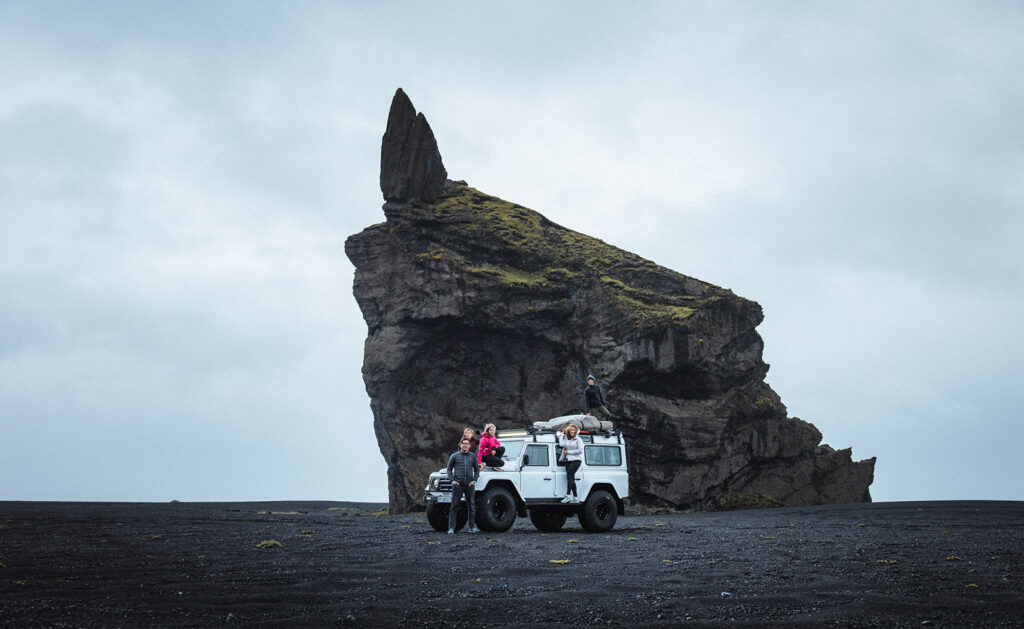

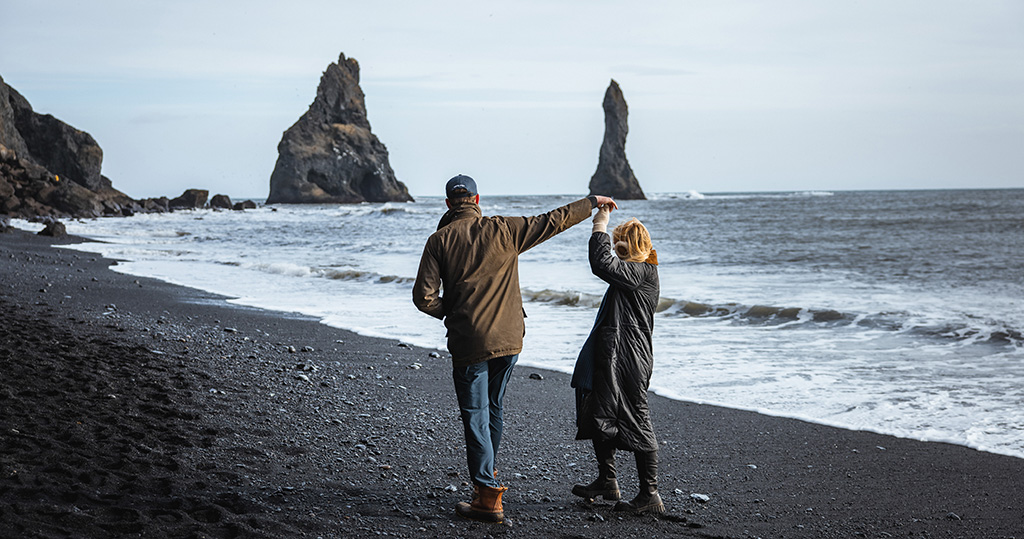
Few places capture the image of Iceland quite as perfectly as Reynisfjara. A seemingly endless stretch of black volcanic sand, powerful North Atlantic waves, strangely geometric basalt columns and mysterious rock formations rising from the ocean make this corner of the South Coast feel almost unreal.
Located just outside Vík í Mýrdal, Reynisfjara is one of Iceland’s most recognisable natural landmarks. Yet the beach becomes far more interesting once you know what you are actually looking at. The sand began as volcanic rock, the cliff preserves the story of cooling lava and the Reynisdrangar sea stacks have been slowly separated from the coastline by the Atlantic.
This Reynisfjara guide looks beyond the famous photographs to explain why the beach is black, how its basalt columns formed, what the trolls have to do with the rocks offshore and why this beautiful place deserves a healthy dose of respect.
Why Is Reynisfjara Black?
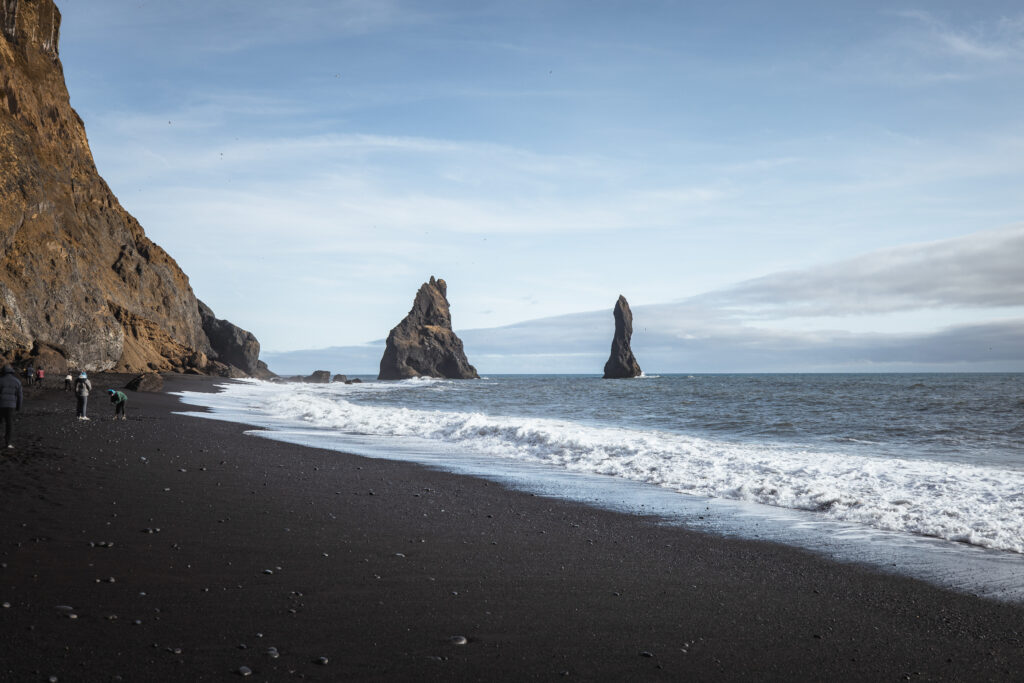
The short answer is volcanoes, although the full story involves lava, glaciers, rivers, weather and an enormous amount of time. Much of Iceland is built from basalt, a dark volcanic rock formed when lava cools and solidifies. Once exposed to Icelandic weather and the relentless movement of water and ice, that rock gradually breaks into smaller and smaller fragments.
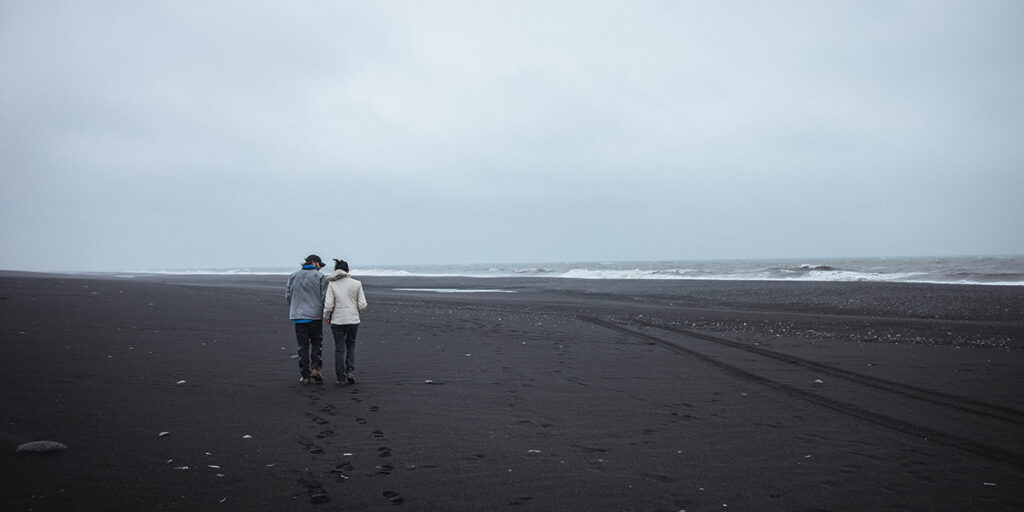
Glacial rivers and floods have transported huge amounts of volcanic material from the interior towards the coast, while waves continue to grind and redistribute it. The result is the dark sand that makes much of South Iceland so distinctive. Reynisfjara is therefore not covered in ordinary sand that simply happens to be black; you are walking across countless fragments of Iceland’s volcanic landscape.
Black beaches themselves are not rare in Iceland, but Reynisfjara brings several extraordinary features together in one place: the cliffs of Reynisfjall, Hálsanefshellir cave, geometric basalt columns and the Reynisdrangar sea stacks rising just offshore. That combination is what gives the beach its unmistakable character.
When Lava Turns into Architecture
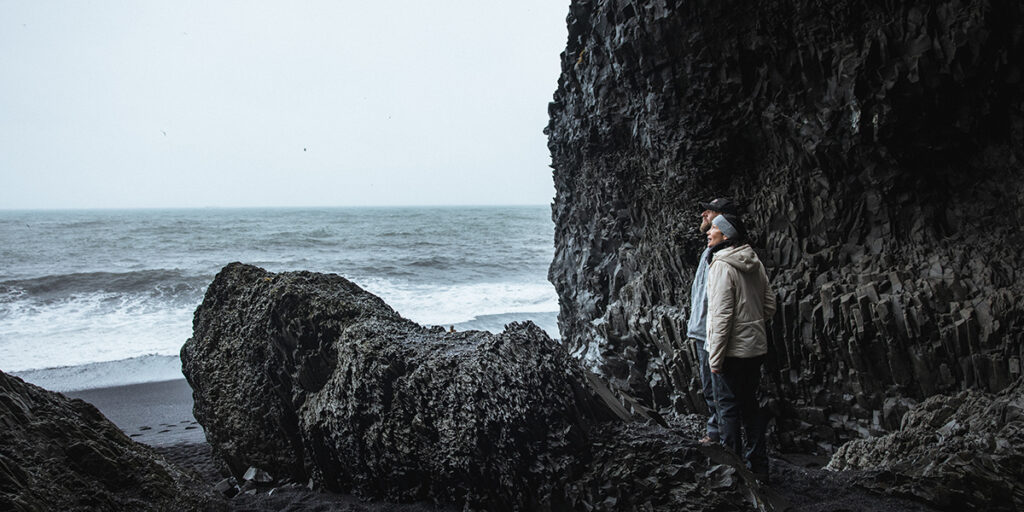
The cliff beside Reynisfjara can look almost man-made. Hundreds of basalt columns rise beside the beach in surprisingly regular shapes, many with five or six sides, forming a dark wall around Hálsanefshellir cave. These formations are known as columnar basalt and develop when thick basaltic lava cools, contracts and fractures into polygonal patterns.
The result resembles the pipes of a giant stone organ and has become one of the most photographed details on the South Coast. It is also a good example of how much more interesting Iceland becomes once its landscapes start to make geological sense: the same volcanic forces that created Iceland’s volcanoes are written into the cliff in front of you.
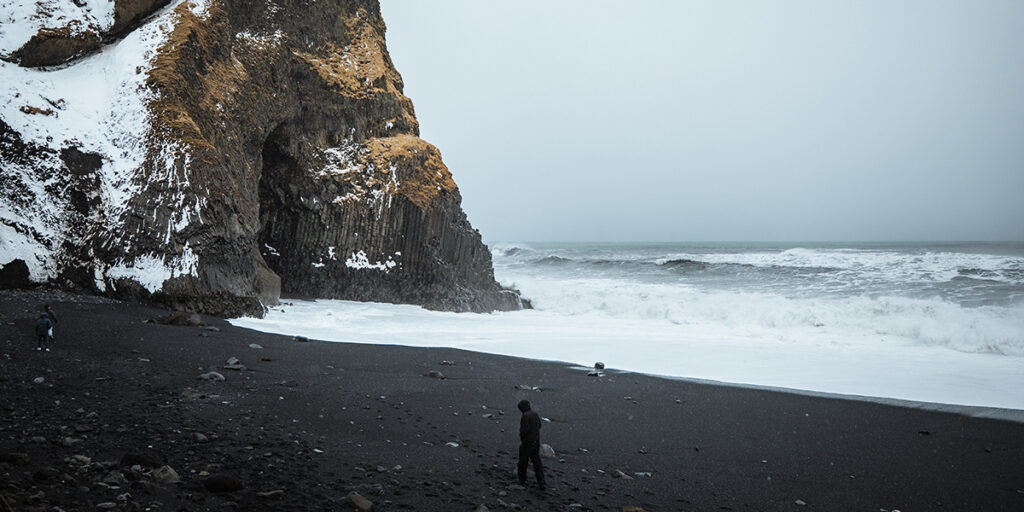
They are understandably tempting to climb for a photograph, but this is still an active coastline below steep cliffs. Rockfall and waves matter considerably more than finding the perfect angle, so we always prefer to work with the conditions we have rather than force a particular photo spot.
Reynisdrangar: Geology, Trolls and the Atlantic
The dark pillars rising from the Atlantic are Reynisdrangar, sea stacks left behind as waves and erosion gradually removed weaker parts of the surrounding coastline. The tallest formations rise more than sixty metres above sea level and can be seen from both Reynisfjara and the beach beside Vík, giving you two very different views of the same landmark. The Katla UNESCO Global Geopark explains their geological story in rather more detail, but Icelandic folklore naturally offers another version.
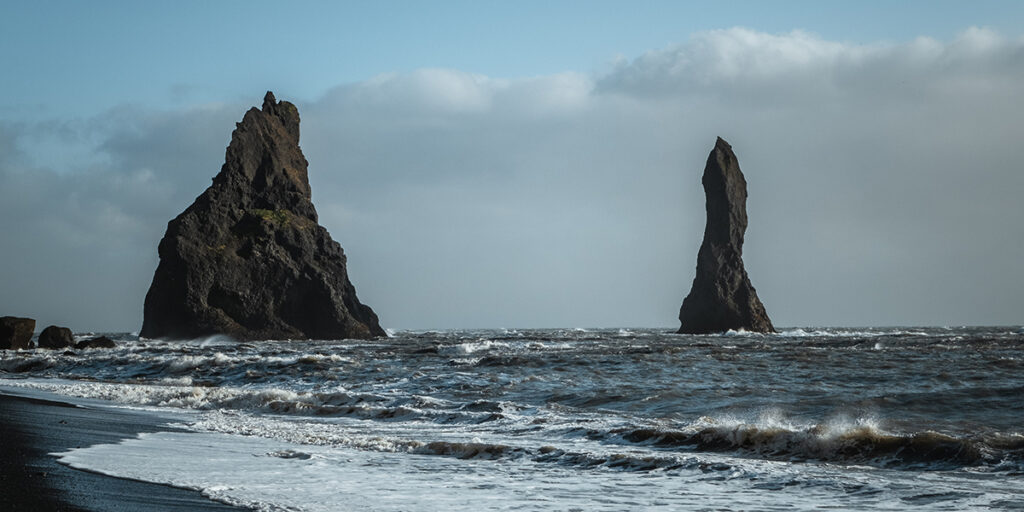
According to one popular legend, two trolls ventured into the sea at night to drag a three-masted ship towards the shore. They became so absorbed in their work that they failed to notice sunrise approaching and, as usually happens to Icelandic trolls caught in daylight, were turned permanently to stone together with the ship.
We rather like that Iceland rarely forces you to choose between science and folklore. Reynisdrangar can be the product of coastal erosion and a group of badly organised trolls at the same time; one explanation tells you how the landscape formed, while the other tells you something about the stories people once used to understand it.
A Beach That Keeps Changing
For all its ancient geology, Reynisfjara is not frozen in time. During the winter of 2025-2026, prolonged wave action, high sea levels and strong weather systems caused unusually rapid coastal erosion, shifting large amounts of black sand and changing parts of the shoreline. Images travelled quickly online and soon turned into dramatic claims that Reynisfjara had somehow disappeared altogether.
It had not disappeared, but it had changed. Visit South Iceland explained in February 2026 that the beach remained open and accessible, while the Icelandic Tourist Board documented significant erosion around the viewing area and safety infrastructure. The episode was a striking reminder that sand on an exposed Atlantic coastline is always moving, even when the landscape feels permanent to us.
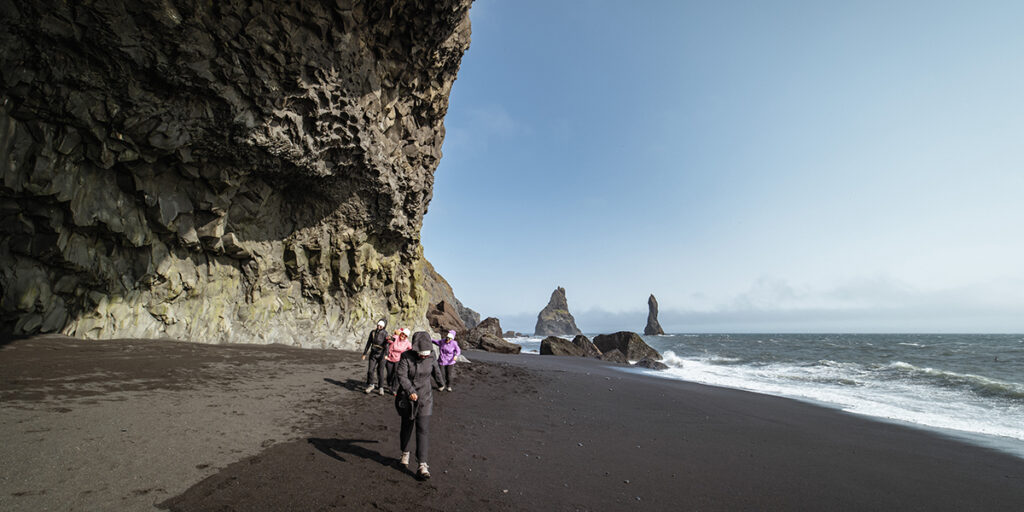
That constant movement is one of the things we find most fascinating about travelling through Iceland. Glaciers change, rivers shift, eruptions create new land and coastlines are rewritten by the sea. Reynisfjara is not simply the result of Iceland’s geological past; some of the same processes are still shaping it today.
Beautiful, Famous and Worthy of Respect
The same Atlantic Ocean that gives Reynisfjara so much of its character also makes it one of the places in Iceland where visitors need to be particularly careful. The main danger comes from so-called sneaker waves: unexpectedly powerful waves that can travel much farther up the beach than those immediately before them.
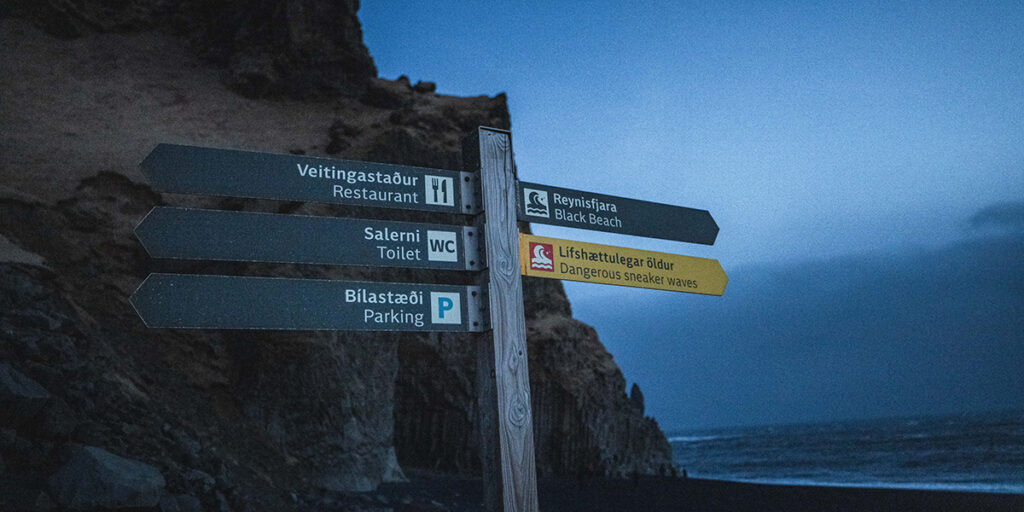
This is what makes them deceptive. A visitor may watch several smaller waves stop at roughly the same point, assume the wet-sand line marks a safe boundary and move closer to the water, only for a much larger wave to surge inland. The cold water, strong currents and steep seabed make this especially dangerous, and fatal accidents have occurred here. Visit Iceland’s official safety guidance is very clear: keep a generous distance, follow the warning system and never turn your back on the ocean.
That does not make Reynisfjara a place to fear. It simply means treating it as the wild Atlantic coastline it is rather than as an ordinary swimming beach. Conditions and access can change, so the signs and barriers you see during your actual visit always matter more than an old photograph or video you found while planning your trip.
Reynisfjara Through the Seasons
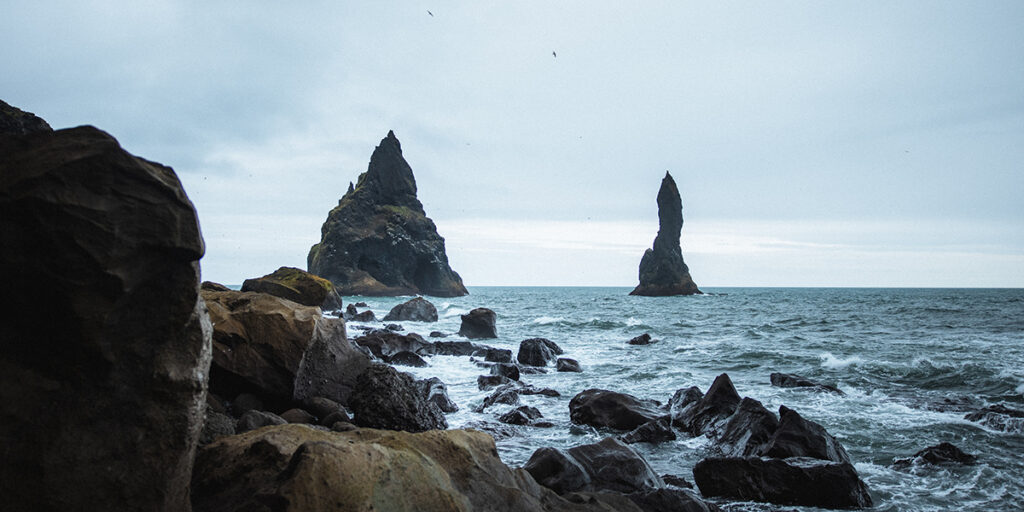
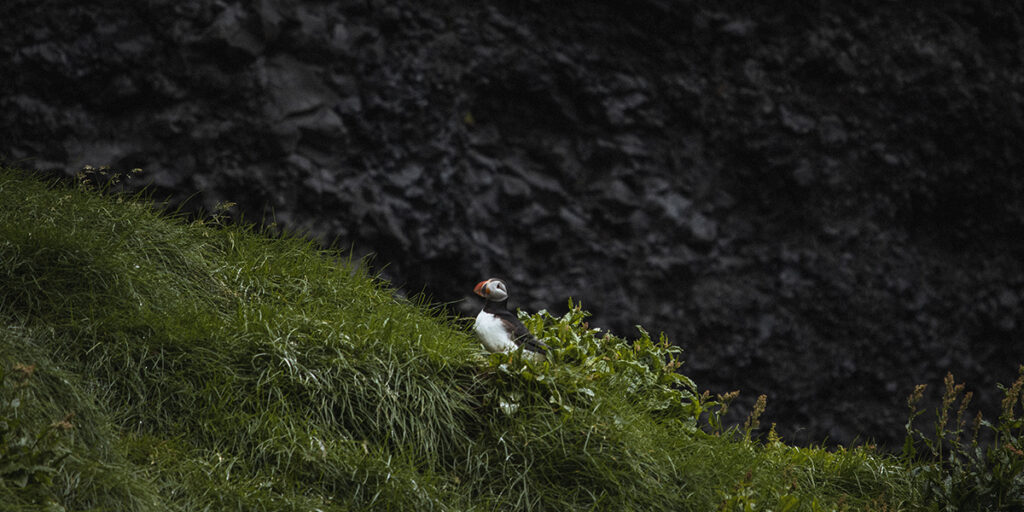
There is no single best season for Reynisfjara because the atmosphere changes completely throughout the year. Summer in Iceland brings very long days, green slopes above the black coastline and nesting seabirds, including puffins during their season. It is also the busiest time, so having the freedom to adjust the order of the day can make a noticeable difference.
Autumn often gives photographers lower light, stronger weather and wonderfully moody skies, while winter can add snow to the black sand and turn the whole coastline almost monochrome. Spring gradually brings longer days and returning birdlife, usually accompanied by the kind of rapidly changing Icelandic weather that makes promising one forecast for the entire day a little optimistic.
If there is one rule, it is not to wait for a perfectly sunny day. Reynisfjara wears clouds exceptionally well, and some of our favourite photographs from the South Coast have been made precisely when the sky looked far from perfect.
More Than a Stop on the South Coast
Reynisfjara lies around 180 kilometres from Reykjavík, but driving there without paying attention to everything in between would rather miss the point. The route passes Seljalandsfoss and Skógafoss, runs beneath glacier-covered volcanoes and continues past Sólheimajökull and Dyrhólaey before reaching Vík. By the time you arrive at the beach, black sand feels like another chapter in the same South Coast story rather than an isolated attraction.
This is why we prefer to experience the region slowly. On a private South Coast journey, the day can respond to the weather, the light and what interests you most. If Reynisfjara is crowded, we can change the timing; if the clouds suddenly open over a glacier, there is room to stop. With a professional photographer travelling with you, there is also no need to spend the entire day trying to document every moment yourself.
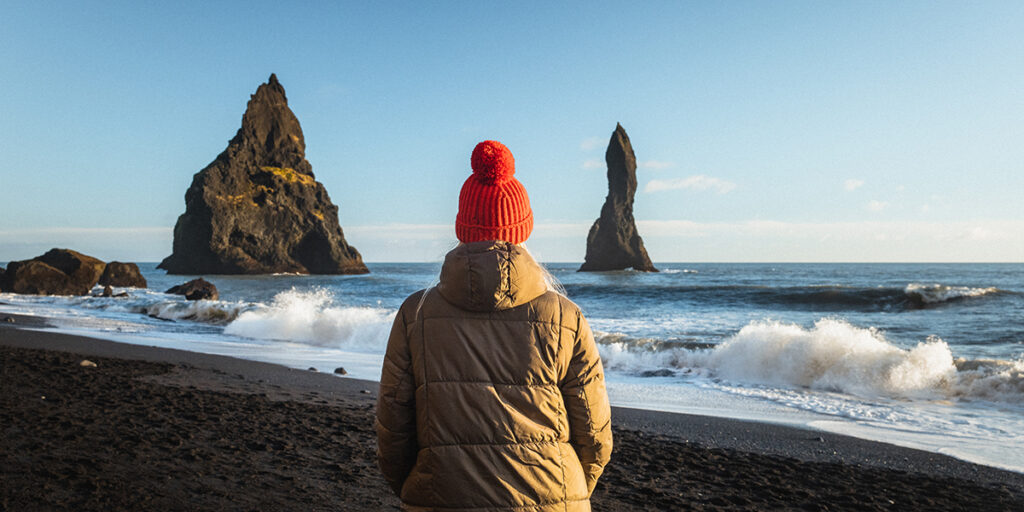
That flexibility is particularly valuable in a landscape that refuses to stay the same. Reynisfjara changes with the tide, weather, season and sometimes the coastline itself, which is exactly why no two visits feel completely alike.
Reynisfjara FAQ
Why is Reynisfjara black?
Its sand is made largely from dark volcanic material. Basalt created by eruptions is gradually broken down and redistributed by weather, rivers, glaciers and ocean erosion until it becomes the black sand seen along the beach.
Is Reynisfjara the only black sand beach in Iceland?
No. Iceland has many black volcanic beaches. Reynisfjara is especially famous because the sand appears together with basalt columns, sea caves, high cliffs and the Reynisdrangar sea stacks.
Is Reynisfjara the same as Vík Black Sand Beach?
No. Reynisfjara lies west of Reynisfjall, while Vík and its black beach are on the eastern side. Both offer views of Reynisdrangar from different angles.
Is Reynisfjara dangerous?
The beach can be visited safely when current warnings are respected, but powerful sneaker waves and strong currents make the shoreline dangerous. Stay well back from the ocean, follow the warning lights and signs and never turn your back on the waves.
Can you swim at Reynisfjara?
No. Reynisfjara is not a swimming beach. Cold water, strong currents and unpredictable waves make entering the sea extremely dangerous.
Is Reynisfjara disappearing?
No, but the coastline is dynamic. Significant erosion in early 2026 shifted large amounts of sand and temporarily changed access to parts of the beach, showing how quickly an exposed Atlantic shoreline can change.
When is the best time to visit Reynisfjara?
Reynisfjara can be visited year-round. Summer offers long daylight and seabirds, autumn brings atmospheric light, while winter can create striking contrasts between snow and black sand. Current weather and wave conditions matter more than the season itself.
Experience Reynisfjara with Icelandic Roamers
Reynisfjara would be impressive even if you knew nothing about it, but Iceland becomes considerably more interesting when the landscapes stop being simply beautiful and begin to tell you something. Here, volcanic rock explains the black sand, cooling lava created the basalt columns, erosion shaped Reynisdrangar and the Atlantic continues to redraw the coastline in front of us.
Our private South Coast tours are built around that way of travelling. With your own local guide, comfortable private vehicle and professional photographer, there is time to understand the places you visit, adapt the day to the conditions and enjoy the moments that cannot be scheduled in advance.
Come for the black sand, the basalt and the famous view, but leave a little time to notice the story beneath your feet. Reynisfjara is one of Iceland’s most photographed places for a reason, and when you experience it without rushing, it can also become one of the most memorable.