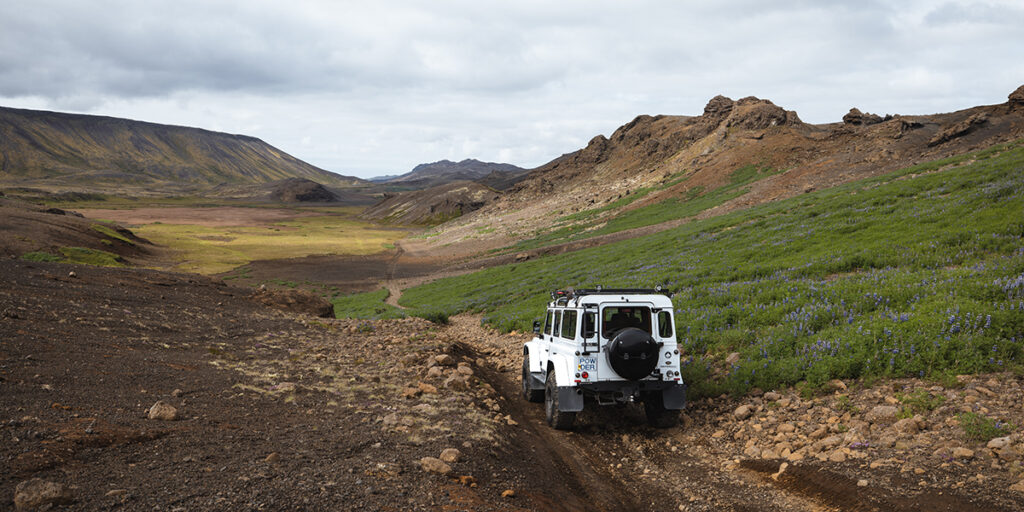
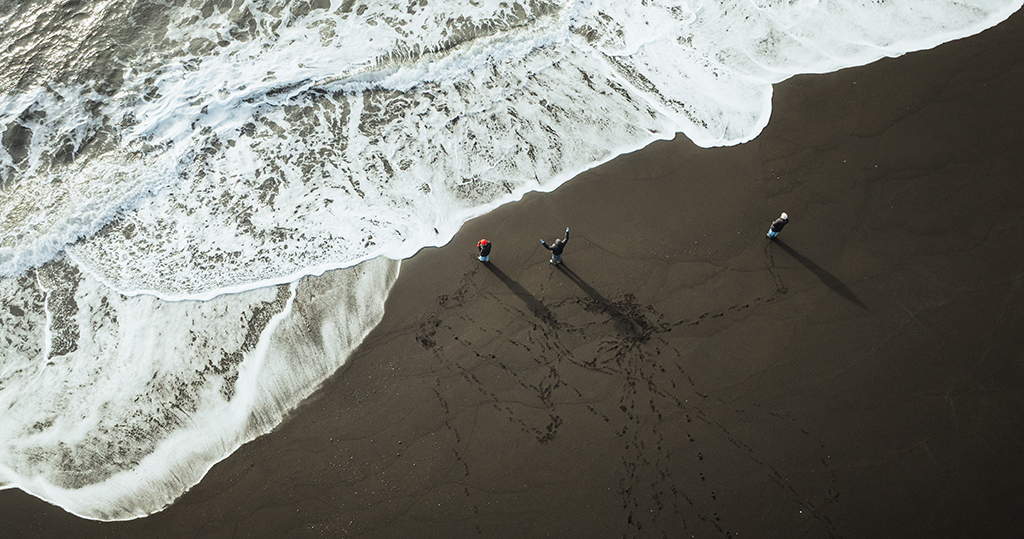
There are places in Iceland where you come to admire the scenery. And then there is Reykjanes… where the scenery seems to whisper the story of how it was made. It’s not simply a landscape shaped by volcanic forces, but an extraordinary place where you can still see those forces at work.
Located just a short drive from Reykjavík, the peninsula brings together steaming geothermal fields, vast lava landscapes, volcanic mountains, black-sand shores and dramatic Atlantic cliffs. Beneath it all, two tectonic plates are slowly pulling apart, while magma continues to find its way through the Earth’s crust. This is what makes a Reykjanes tour so different from simply adding another sightseeing day to your Iceland itinerary. With a private local guide, there is room to experience those contrasts rather than rush through them.
The dark waters of Kleifarvatn, the steam and gorgeous colour of Seltún, young lava fields and the dramatic coastline… This Reykjanes Peninsula guide takes you from its volcanic heart to the Atlantic coast, exploring the landscapes, geological landmarks and quieter places that make the region so fascinating.
Where the Earth Opens Up
Reykjanes occupies a remarkable position on the Mid-Atlantic Ridge, the enormous underwater mountain range that stretches across the Atlantic. Most of the ridge lies beneath the ocean, but here it rises above sea level, making the geological story unusually easy to see. The peninsula forms part of the Reykjanes UNESCO Global Geopark, with hundreds of fissures and faults, numerous volcanic formations and several distinct volcanic zones.
You don’t need to know much about geology to appreciate the landscape. The evidence is everywhere: broad lava fields covered in moss, rugged volcanic ridges, steaming ground and dark beaches where the land eventually meets the sea. What makes Reykjanes fascinating is the way these elements appear almost side by side, giving you a sense of travelling through different chapters of Iceland’s geological story within a single day.
And then there are the quieter moments.
Kleifarvatn: Iceland at Its Quietest
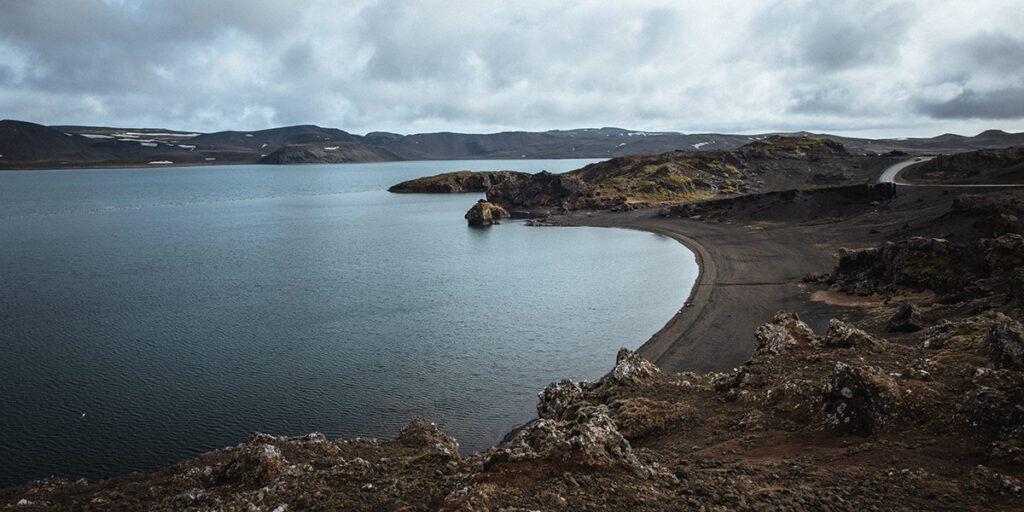
Kleifarvatn is one of those magical places that can make you feel serene in an instant. The largest lake on the Reykjanes Peninsula sits among dark volcanic hills, its shoreline broken by rugged lava formations and stretches of black sand. On a calm day, the water can be almost perfectly still; when the weather rolls in, mist and low cloud transform the same landscape into something much more mysterious.
It is a beautiful reminder that Reykjanes isn’t all steam and volcanic drama. Some of its most memorable moments are remarkably peaceful.
For us, this is also where the advantage of a private journey starts to become obvious. If the weather gives you a beautiful reflection on the lake, there is no need to watch the clock because a coach full of other travellers is waiting. You can stop, take photographs, enjoy the view and let the landscape set the pace for a while.
That freedom is one of the simplest luxuries of private travel – and in a place as changeable as Iceland, it can make a surprisingly big difference.
Seltún: When the Ground Starts to Steam
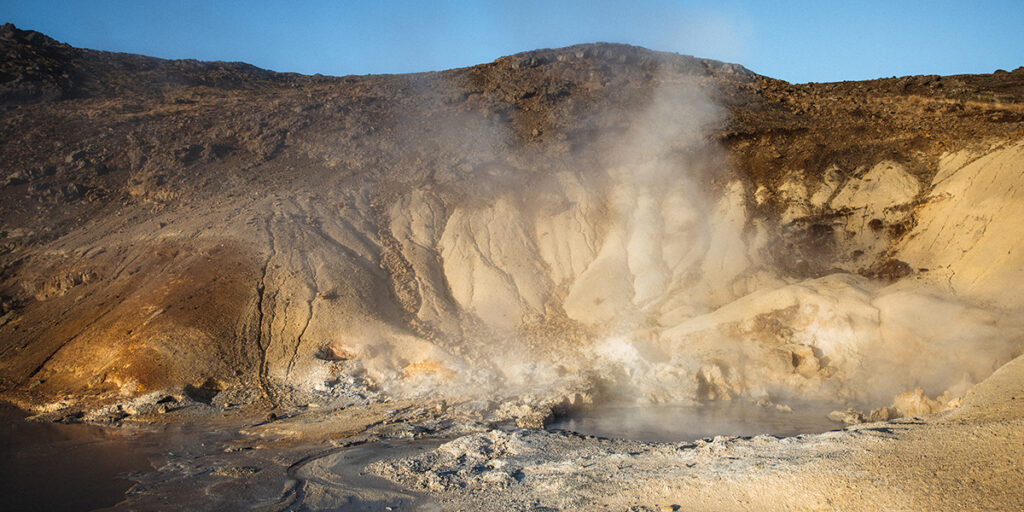
A little farther on, the mood changes completely.
The Seltún geothermal area lies within the Krýsuvík geothermal system, where heat from beneath the peninsula rises towards the surface. Wooden paths lead through steaming fumaroles, bubbling mud pots and hills stained with striking mineral colours. The air carries that unmistakable sulfurous smell, while steam constantly escapes from the ground around you.
It is difficult to stand at Seltún without becoming aware that the landscape is doing something. The colours are not simply there to make a pretty photograph, and the steam is not a theatrical effect. They are visible signs of the geothermal forces beneath Reykjanes, where hot water, gases and volcanic activity interact below the surface.
The result is one of those Icelandic landscapes that feels almost otherworldly while being completely, wonderfully real… And this is where having a photographer along can be particularly rewarding! 🙂
A Landscape Born in Fire
The story becomes even more immediate when you reach the areas around Fagradalsfjall.
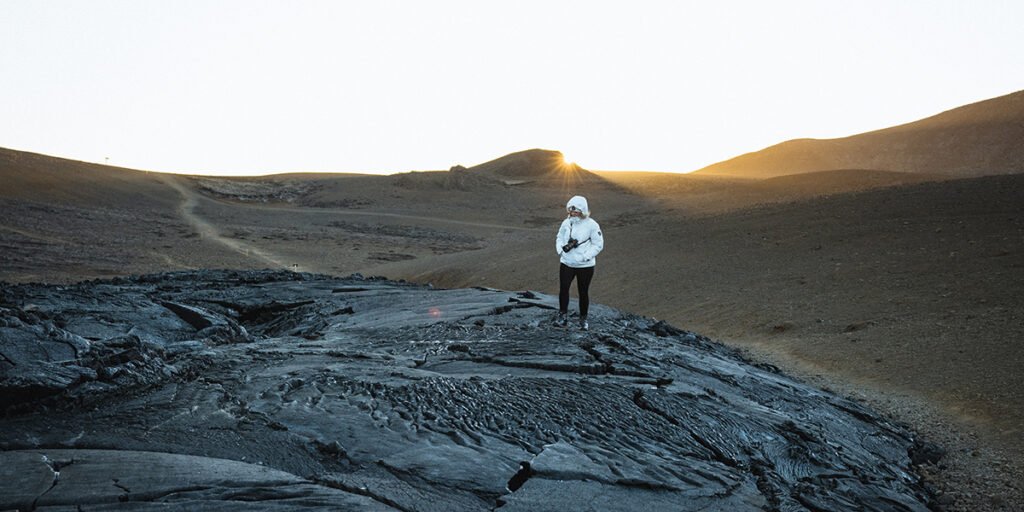
In 2021, volcanic activity returned to this part of Reykjanes after centuries of relative quiet, beginning a new period of eruptions that dramatically changed the landscape. Fresh lava spread across the peninsula, creating a striking contrast between newly formed volcanic rock and older, moss-covered lava fields.
Standing beside such a landscape is a rather different experience from looking at a volcano in a photograph. You can see how rough and young the lava looks, how little time has passed for weather and vegetation to soften its edges, and how enormous the scale of geological time becomes when you are looking at something that has only recently been created.
Depending on current conditions, weather and current access rules, the Fagradalsfjall area can also be experienced on foot. This is one of the reasons we never think of an Iceland itinerary as something that should be followed blindly. Reykjanes is an active volcanic region, and conditions can change. As of August 2026, the Icelandic Meteorological Office was still reporting continued land uplift and magma accumulation beneath Svartsengi, with the possibility of further volcanic activity remaining part of the area’s ongoing story.
For visitors, that means keeping an eye on official safety information and listening to local advice. For a private tour, it also means having a guide who can adapt the day rather than treating an itinerary as set in stone.
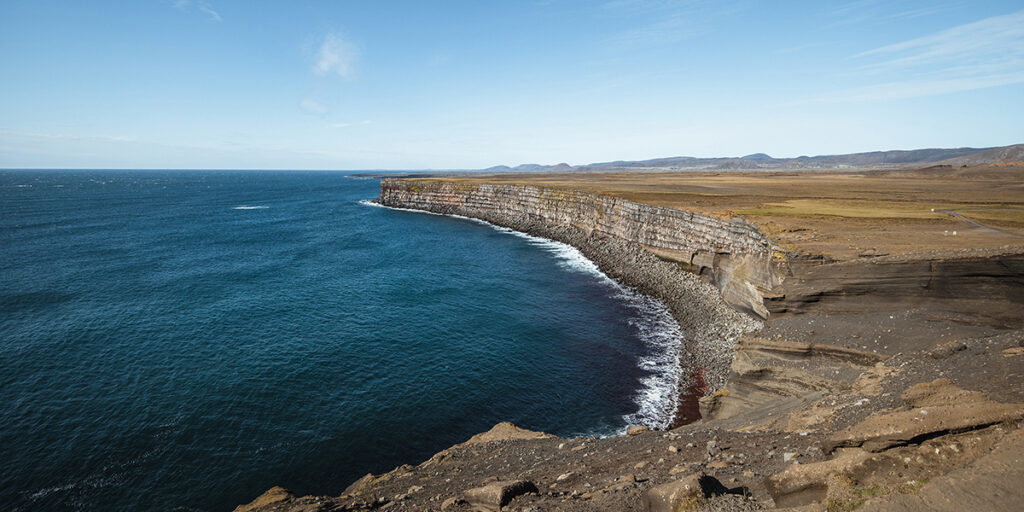
Where Iceland Meets the Atlantic
Eventually, the landscape opens towards the ocean.
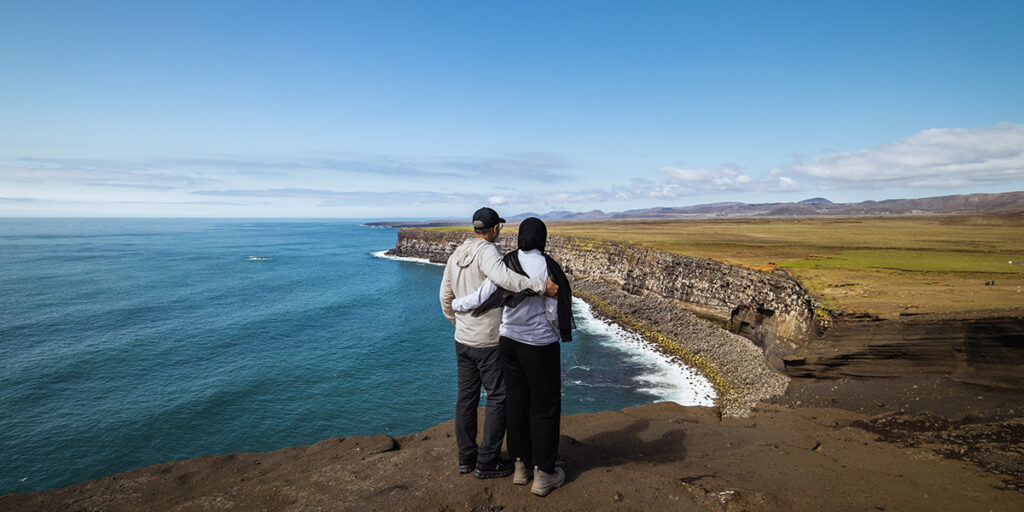
At Krýsuvíkurberg, the cliffs rise above the Atlantic in a dramatic sweep of dark volcanic rock. In summer, seabirds gather along the cliffs, while below them the waves continuously work against the coastline. There is something wonderfully elemental about standing here: no geothermal steam, no manicured attraction, just volcanic land meeting a powerful ocean.
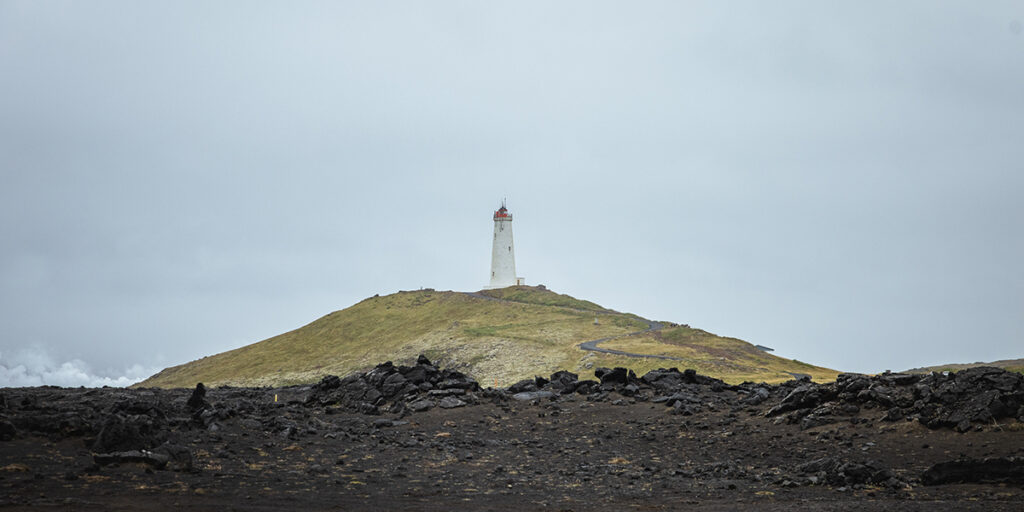
Further towards the tip of the peninsula, Reykjanesviti stands above the coast. Built in 1878, it is Iceland’s oldest lighthouse, and the surrounding Valahnúkamöl cliffs are among the places where Reykjanes feels at its wildest. Basalt formations rise from the sea, waves crash against the shore and the weather can change the character of the entire scene in moments.
This is one of our favourite things about photographing Iceland. You don’t always need sunshine! A grey sky can make the volcanic cliffs feel almost monochromatic, and a sudden break in the clouds can illuminate the ocean, turning a quiet afternoon into something much more dramatic.
Reykjanes rarely needs help looking impressive.
The Bridge Between Continents and the Story Beneath It
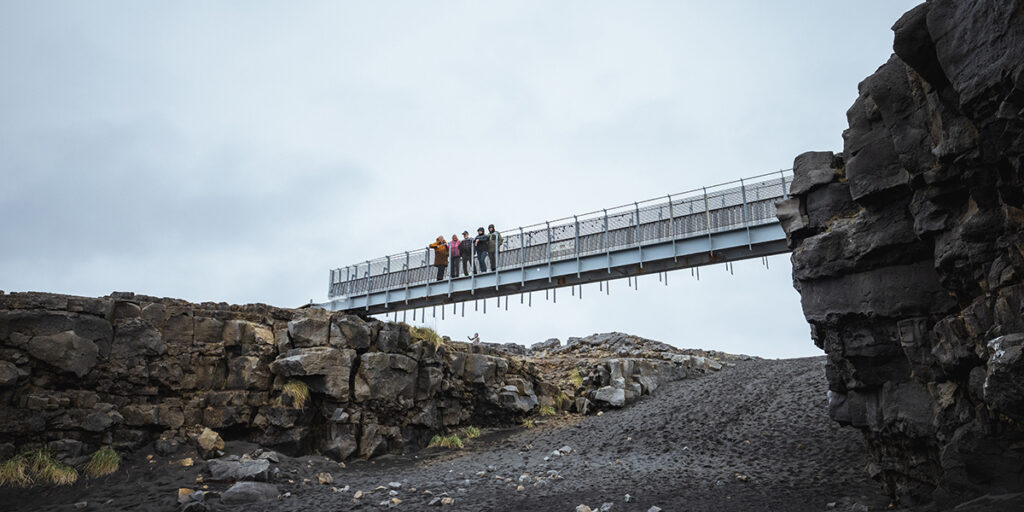
Then comes one of the peninsula’s most famous little landmarks: the Bridge Between Continents.
At first glance, it is simply a footbridge crossing a fissure in a black lava landscape. But look down and the story becomes much more interesting. The fissure is evidence of the divergent boundary between the North American and Eurasian tectonic plates, which are slowly moving apart. The bridge was built in 2002 as a symbol of that connection.
Of course, you won’t actually watch two continents drifting apart while you stand there. The movement is far too slow for that – and that’s precisely what makes the place so fascinating. The geological process is enormous, but its visible expression can be as simple as a crack in the ground beneath your feet.
You can cross the bridge in a few moments, take your photograph and move on. Or you can stop for a little longer and think about what you’re actually looking at.
We rather prefer the second option.
And because the Reykjanes Peninsula remains seismically active, marked paths and current safety guidance matter here. Recent seismic activity has created or reopened cracks in several places, including near the Bridge Between Continents, so this is one of those locations where staying on designated paths is particularly important.
The Luxury of Having Time
This is one of the reasons we love showing Reykjanes as a private experience. The itinerary gives you a framework, but the day doesn’t have to feel rushed. If the light changes over Kleifarvatn, the weather transforms Seltún in the blink of an eye, or you simply want a little longer somewhere – there is room to enjoy it all with Icelandic Roamers!
With your own guide and vehicle, you have the freedom to spend longer somewhere that catches your attention, pause for an unexpected photograph or adjust the pace to suit your interests rather than follow a fixed group schedule.
We don’t want you to spend your entire day trying to photograpjh Iceland while everyone else waits. We would rather you enjoy the landscape, have a conversation, ask questions, look around – and let your photographer capture some of those moments for you.
Reykjanes Through a Local’s Eyes
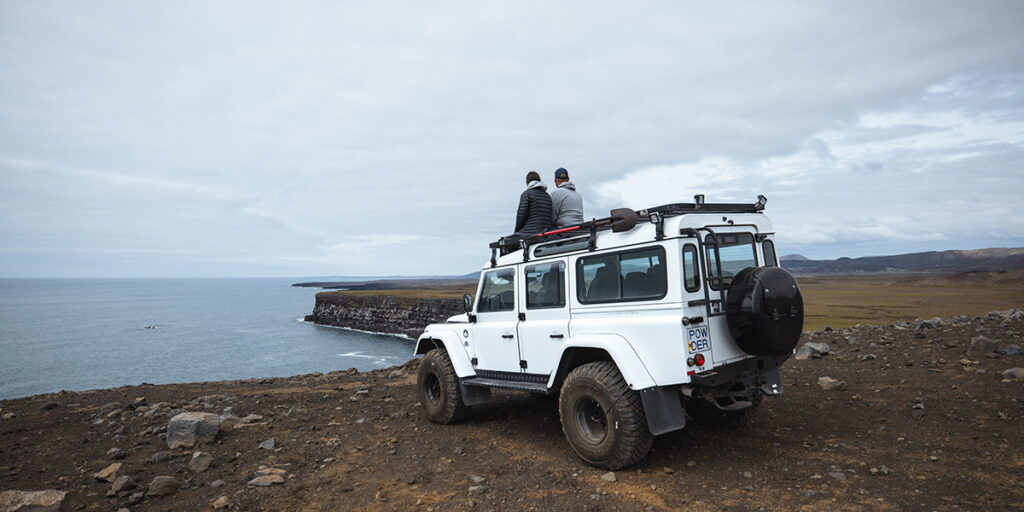
Perhaps the biggest surprise of Reykjanes is how much variety fits into such a relatively compact part of Iceland – and our role is not simply to take you from one attraction to the next. A local guide can help connect the places you see: explaining the geology, pointing out details you might otherwise miss and adapting the route to the conditions on the day.
Our Reykjanes experience is an exclusive, private tour, which includes a local certified guide, experienced driver and professional photographer, with 15 edited photographs from the journey.
That last part is especially important to us. With a professional photographer along, you can enjoy the experience while someone else captures it for you.
Because the best souvenirs you can bring from Iceland are memories – to stay with you forever in a stunning, physical form! 🙂
A Different Side of Iceland
Reykjanes is often one of the first parts of Iceland visitors encounter because of its proximity to Keflavík International Airport and Reykjavík. It would be easy, therefore, to think of it as somewhere you simply pass through on your way to the rest of the country. It is a compact introduction to some of the forces that have shaped Iceland: volcanic activity, geothermal heat, shifting tectonic plates and the relentless Atlantic.
Reykjanes doesn’t need to pretend to be untouched – it shows you the forces that made it. This is a place where Iceland’s character is unusually concentrated and there is something wonderfully honest about it.
For travellers looking to experience something beyond Iceland’s most familiar highlights, it makes a wonderfully varied day of exploration.
Experience Reykjanes with Icelandic Roamers
Our Reykjanes Peninsula Private Tour is designed for travellers who want to experience this extraordinary landscape without being rushed from one viewpoint to the next. We visit the peninsula’s volcanic, geothermal and coastal highlights, but the day remains flexible enough to respond to the weather, the light and, most importantly, your own curiosity.
With a private local guide and professional photographer by your side, Reykjanes becomes more than a day of sightseeing. It becomes a chance to understand the landscape, photograph it beautifully and enjoy those little moments that are impossible to schedule in advance.
Whichever way you choose to experience the peninsula, make Icelandic Roamers your guides and travel companions and make the most of your Reykjanes adventure. We bet you won’t be disappointed! 🙂